
 Posted by
 Dubai can look like a city where a car is essential. Attractions are spread across different neighbourhoods, some hotels are not close to a Metro station, and the heat can make long walks uncomfortable. Still, renting a car is not necessary for every visitor, especially if your plans focus on the main sightseeing areas.
The key is knowing which journeys are easiest by train, where a bus connection helps, and when paying for a taxi is worth the extra cost. This guide explains the transport options, Nol card basics, airport connections, practical sightseeing routes, and realistic daily budget planning. With a little preparation, Dubai Without a Car can be a manageable way to explore the city without dealing with parking or driving.
1. How to Get Around Dubai Without a Car
Dubai has several ways to get around, but you do not need to use every option. The Metro is useful for major routes, buses serve neighbourhoods beyond the rail network, and the tram connects parts of Dubai Marina and nearby waterfront areas. Taxis are convenient when a destination involves several transfers or a long walk.
Start by checking where your hotel sits in relation to the nearest station. Look at the actual walking route, not just the distance on a map; a short-looking walk can feel much longer in hot weather. Travelling Dubai Without a Car works best when you use public transport for the main journey and take a taxi only for the final stretch when needed. Group nearby attractions on the same day to avoid crossing the city repeatedly.
2. Dubai Metro and Nol Card: Routes, Fares, and Tips
Dubai Metro has two main lines: the Red Line and the Green Line. The Red Line serves Dubai International Airport at Terminals 1 and 3 and connects with areas including Downtown Dubai. The Green Line is useful for parts of historic Dubai, including Deira and Bur Dubai. Check the nearest station for your exact destination before travelling.
A Silver Nol card costs AED 25, including AED 19 in travel credit. Standard Silver-card fares are AED 3 within one zone, AED 5 across two adjacent zones, and AED 7.50 across more than two zones. Transfers count as one journey only when the RTA’s conditions are met.
Buy or top up your card before travelling, and keep enough credit for the return journey. If you plan on Dubai Without a Car, checking fares and routes in advance can prevent last-minute confusion. Confirm current rules with the RTA before your visit.
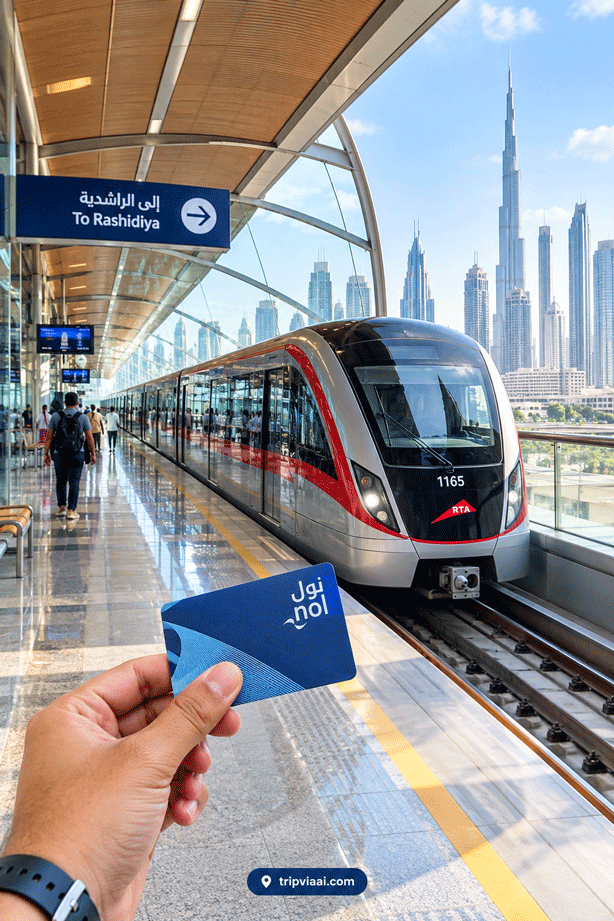
Dubai Without a Car: Dubai Metro and Nol Card Guide
3. Dubai Public Buses and Tram: When to Use Them
Buses are useful when your destination is not close to a Metro station. They connect additional neighbourhoods and can help you reach places where a train would leave you with a long walk. The trade-off is travel time: traffic, waiting periods, and transfers can make some bus journeys slower than expected. Check the route before leaving your hotel rather than choosing a bus simply because its stop looks nearby.
The Dubai Tram is particularly convenient around Dubai Marina and Jumeirah Beach Residence (JBR). It connects with selected Metro stations, making it easier to combine rail travel with local trips along the waterfront.
When planning Dubai Without a Car, compare the complete journey, including walking and waiting time. A bus may save money, while a short taxi ride might be more practical if you are carrying shopping bags or travelling with young children. Choose based on the actual route, not just the ticket price.
4. Dubai Taxi Prices and Ride-Hailing Apps
Taxis are useful when public transport involves several transfers, when you have luggage, or when you want to travel directly to your hotel. Dubai’s RTA lists regular road-pickup starting fares of AED 5 during the day and AED 5.50 at night. Airport taxi starting fares are AED 20 for a normal taxi and AED 25 for a van. These are starting fares, not the final price of your trip.
The final amount can include distance travelled, waiting time, and applicable toll charges. App-booked journeys may have different starting fares depending on the booking conditions and time. Check the fare estimate before confirming a ride, and make sure the destination shown in the app is correct.
For Dubai Without a Car, taxis work best as a flexible option rather than the automatic choice for every journey. Use one when the time saved or extra convenience justifies the cost, particularly after a long flight or a busy day of sightseeing.
5. Dubai Airport to Hotel: Metro vs Taxi
Your airport transfer depends on where you are staying, when you land, and how much luggage you have. At Dubai International Airport (DXB), Metro access is available at Terminals 1 and 3. If you arrive at Terminal 2, check the available transfer options separately rather than assuming you can board the Metro directly from that terminal.
The Metro can be convenient when your hotel is close to a station and the service is operating. A taxi may be easier if you have several suitcases, are travelling with children, or would need another ride after leaving the train. Airport taxi starting fares are AED 20 for a normal taxi and AED 25 for a van, before distance and applicable charges.
For Dubai Without a Car, compare the full journey rather than the ticket price alone. Check your terminal, hotel address, and transport schedule before travelling. This small step can prevent an inconvenient transfer after a long flight.
6. Best Way to Reach Dubai’s Popular Attractions
The easiest way to plan sightseeing is to group attractions by neighbourhood. For Downtown Dubai, take the Metro to the Burj Khalifa/Dubai Mall station and follow the pedestrian connection towards Dubai Mall. Allow extra time for the walk, especially during busy periods.
For Dubai Marina and JBR, the Metro, tram, and walking can work well together, depending on your exact destination. In Old Dubai, stations around Deira and Bur Dubai provide access to historic neighbourhoods and Dubai Creek. You may still need a short walk or another connection after leaving the train.
A practical Dubai Without a Car itinerary avoids crossing the city several times in one day. Explore Downtown together, then reserve another outing for the Marina and waterfront. For Old Dubai, plan the Metro stop and creek crossing together. Before setting out, check the walking distance from the station to each attraction instead of assuming the train will take you directly to the entrance.
7. Walking and Water Transport in Dubai
Walking works well when attractions, restaurants, and hotels are close together. Dubai Marina and parts of JBR have waterfront promenades, while historic areas near Dubai Creek offer opportunities to explore traditional streets and markets on foot. The main limitation is the weather: during hot months, even a short outdoor walk can become uncomfortable. Carry water, check the temperature, and use air-conditioned transport when necessary.
Traditional abra boats cross Dubai Creek at selected points between Deira and Bur Dubai. They offer a practical alternative to travelling around the creek by road and can add a local experience to a sightseeing day. Check the departure point, operating hours, and current fare before setting off.
For Dubai Without a Car, walking and water transport are best for short, location-specific journeys. They do not replace the Metro across the whole city, but they can make exploring historic districts easier without paying for a taxi every time you move between nearby places.
8. Dubai Public Transport Timings and Common Mistakes
Metro schedules vary by day, and special occasions or public holidays may bring different operating hours. The RTA publishes regular Metro timings, but the first and last trains can vary by station. Check the latest timetable for your actual boarding station instead of relying only on the general operating hours.
Another common mistake is choosing a hotel based only on its distance from a station. The walking route, station exit, transfers, and weather can affect the real journey. Likewise, a route that works during the day may not be convenient for returning after a late dinner or evening attraction.
When planning Dubai Without a Car, save your return route before leaving the hotel, maintain enough Nol credit, and check the last suitable connection. Keep a taxi option available if public transport does not fit your schedule. A few minutes of planning can prevent a long wait or an expensive last-minute decision.
9. How Much Does Transportation in Dubai Cost?
Your daily transport spending depends on your hotel location, number of journeys, and how often you use taxis. Someone staying near a Metro station may spend much less than a traveller who needs a taxi at the beginning and end of every trip. The number of people travelling together also affects which option offers the best value.
Use these figures as illustrative planning budgets, not official daily fares:
| Travel style | Estimated daily budget | Assumption |
|---|---|---|
| Solo traveller | AED 15–35 | Mainly public transport |
| Couple | AED 30–70 combined | Mainly public transport |
| Family | AED 50–150+ | Public transport with occasional taxis |
Airport transfers, long taxi rides, and attraction tickets are excluded. Actual spending may be higher depending on your itinerary.
To keep Dubai Without a Car affordable, estimate the cost of your planned journeys before travelling. Group nearby attractions together and use taxis selectively when the extra convenience justifies the expense.
10. A Practical Transport Plan for First-Time Visitors
Imagine spending the morning at Dubai Mall and the afternoon exploring another Downtown attraction. You could take the Metro for the main journey and walk between nearby places instead of booking separate taxis for every stop. On another day, focus on Dubai Marina and JBR, using the tram where it suits your route. Save Old Dubai for a separate outing so you do not waste time crossing the city repeatedly.
Before leaving each morning, check the route, estimated journey time, weather, and return options. Save your hotel address on your phone and allow extra time for walking or transfers. If you are travelling with children or carrying luggage, convenience may matter more than saving a small amount on a fare.
A well-planned Dubai Without a Car trip does not mean avoiding taxis completely. It means choosing each transport option where it makes the most sense. Renting a car may still suit itineraries with several distant destinations, but city-focused holidays can often work without one.
Dubai Transport Options at a Glance
| Transport option | Best for | Main limitation |
|---|---|---|
| Metro | Major connected areas and longer journeys | Some attractions require walking or a transfer |
| Public bus | Neighbourhoods beyond Metro stations | Traffic and waiting time |
| Dubai Tram | Dubai Marina and nearby waterfront areas | Limited route coverage |
| RTA taxi | Direct journeys, luggage, and families | Usually costs more than public transport |
| Ride-hailing apps | Booking and comparing fare estimates | Prices can vary by time and booking conditions |
| Abra | Selected Dubai Creek crossings | Useful only near relevant waterfront routes |
| Walking | Short journeys in walkable districts | Heat and distance |
Frequently Asked Questions
1. Can tourists explore Dubai without renting a car?
Yes. Many visitors can explore major tourist areas using the Metro, buses, tram, taxis, and walking. The experience is easier when your hotel is near public transport and you group nearby attractions together.
2. Which Nol card should visitors consider?
The Silver Nol card is a practical option for many visitors using eligible public transport. It costs AED 25, including AED 19 in travel credit. Check the latest RTA information for current fares and payment rules.
3. Is the Metro cheaper than a taxi?
For many journeys, the Metro is less expensive. A taxi may be worth the extra cost when you have luggage, are travelling with a group, or would otherwise need several transfers.
4. How can I travel from Dubai Airport to my hotel?
The Metro can be convenient for hotels near stations serving Terminals 1 and 3. A taxi may be more practical for hotels farther away, late arrivals, or travellers with several suitcases. Confirm your terminal and check the latest service schedule before deciding.
5. How much should I budget for daily transport?
Your budget depends on the number of journeys, distances, and taxi use. Use the estimates in this guide as a starting point, then calculate costs based on your actual itinerary.
Conclusion
Exploring Dubai without driving is possible when you plan around your accommodation and the places you want to visit. The Metro connects many major areas, buses and the tram provide additional options, and taxis offer direct travel when convenience matters. Walking and abra boats can also make selected local journeys easier.
Rather than choosing one transport method for the entire holiday, compare the complete journey: fare, walking distance, waiting time, and return options. Check official schedules and fares before travelling, particularly around public holidays or special events.
With a realistic itinerary and flexible transport choices, Dubai Without a Car can be a practical way to discover the city without the added responsibility of renting and driving a vehicle.
For more practical travel guides, smart planning tips, and money-saving travel advice, visit TripViaAI