
 Posted by
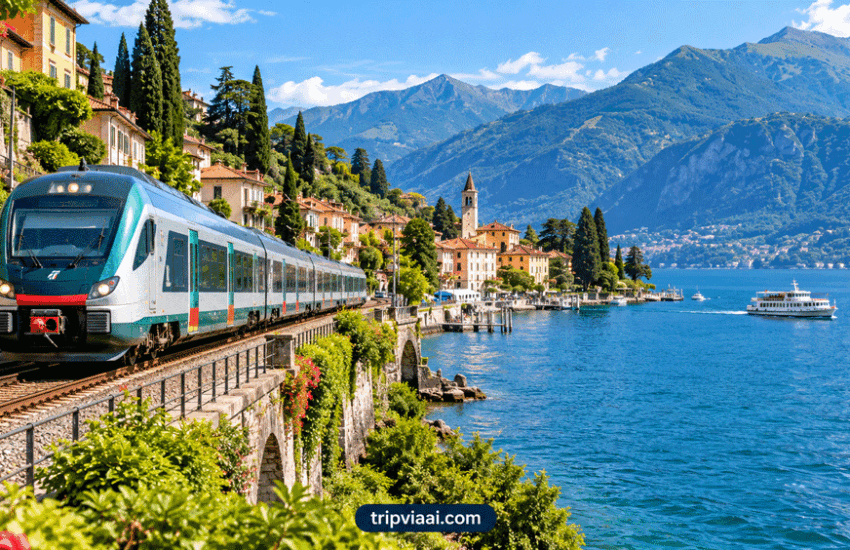
Lake Como is one of northern Italy’s most popular destinations for travellers staying in Milan. Surrounded by mountains and dotted with historic towns, elegant waterfronts and picturesque villages, the lake offers a refreshing escape from the city. Travelling by train is a practical option for many visitors because it avoids the stress of driving and makes it possible to plan a day trip without renting a car.
However, Lake Como is not a single destination with one railway station. The best route depends on whether you want to explore Como city, stroll through Varenna or continue by ferry to Bellagio and other lakeside towns. Choosing the wrong arrival station can add unnecessary travel time and make a short visit feel rushed.
If you want to organise your journey without feeling overwhelmed by routes and bookings, read our guide on How to Plan a Trip Without Feeling Overwhelmed.
This guide to Milan to Lake Como by train covers the main railway routes, departure stations, journey times, ticket prices, booking instructions and onward transport options. It also explains how to plan a realistic day trip, compare different itineraries, estimate your budget and organise the return journey. By the end, you will have the information needed to choose a suitable route and make the most of your time at Lake Como.
Is Taking the Train from Milan to Lake Como Worth It?
For most travellers planning a day trip, taking the train is one of the most practical ways to reach Lake Como from Milan. You can avoid driving through unfamiliar roads, searching for parking in busy lakeside towns and dealing with traffic during popular travel periods. Trains also make it easier to plan a trip around a specific town rather than spending the day behind the wheel.
However, the best option depends on what you want to experience. If your goal is to explore Como city, you can travel directly to one of its central railway stations and spend the day visiting the historic centre, waterfront and local cafés. If you prefer a smaller lakeside village, Varenna is another option accessible by direct train from Milano Centrale on suitable services. Travellers hoping to visit Bellagio should remember that it has no railway station, so the journey requires additional transport, commonly a ferry.
Advantages of travelling by train
- Convenient access: Direct regional services connect Milan with several useful destinations around the lake.
- No parking worries: You can explore on foot after arriving in town.
- Flexible trip planning: Choose a simple visit to Como or combine a railway journey with a ferry.
- Potentially lower costs: A regional train may be more economical than hiring a car, particularly for solo travellers and couples.
What should you consider before choosing the train?
Rail travel does not take you directly to every village around Lake Como. You may need to walk from the station, use local transport or coordinate a ferry connection. During a busy day trip, waiting for onward transport can take a significant part of your available sightseeing time.
For a first visit, Milan to Lake Como by train is a particularly sensible choice if you select one main destination and plan the return journey in advance. If you want to explore several distant towns, compare the complete journey, including ferries and transfers, before deciding on your itinerary.
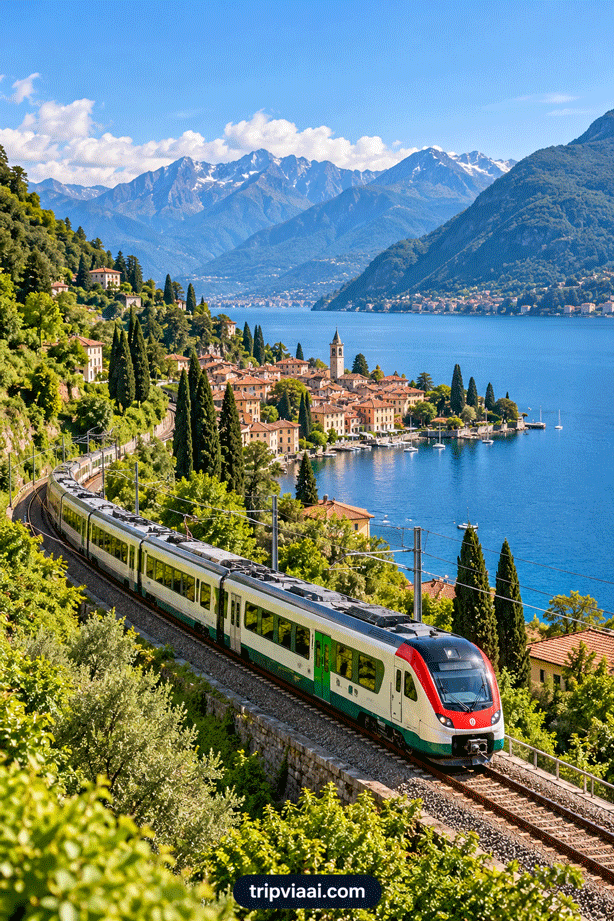
Scenic Train Journey Through Lombardy to Lake Como, Italy
Which Milan Train Station Should You Use?
Choosing the correct departure station is one of the most important steps when planning Milan to Lake Como by train. Milan has several railway stations, but two are particularly useful for reaching Como city: Milano Centrale and Milano Cadorna. If your destination is Varenna, Milano Centrale is the station to check for direct services.
The right choice depends on where you are staying in Milan, which train is available and which part of the lake you want to visit. A direct train from a station near your accommodation may save more time overall than travelling across Milan to catch a slightly faster service.
Milano Centrale: Best for Como San Giovanni and Varenna
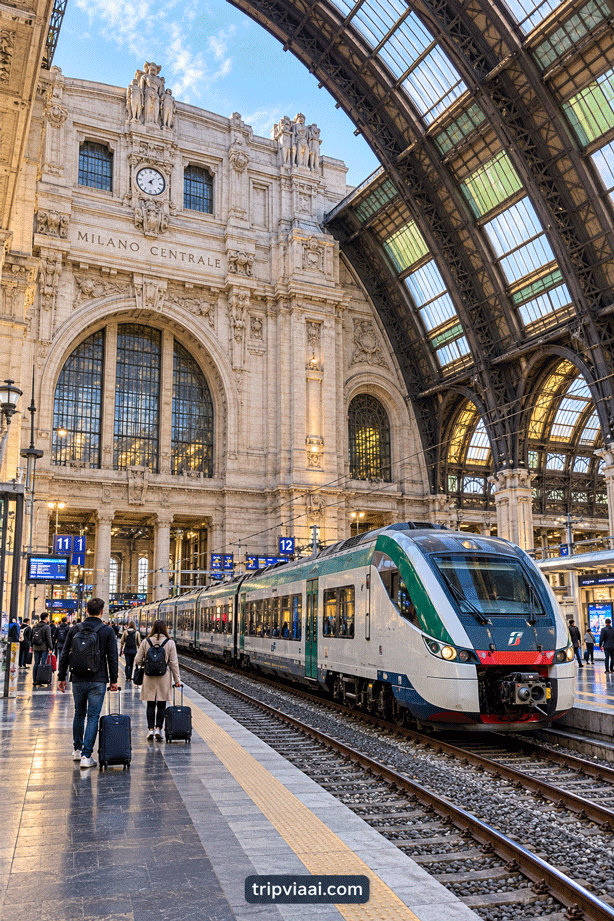
Milano Centrale Railway Station
Milano Centrale is Milan’s main railway hub and a convenient departure point for many visitors arriving by train or staying nearby. Direct regional services connect it with Como San Giovanni, which is useful for exploring Como city. Direct services to Varenna-Esino also make Centrale a practical option for travellers heading to the central part of Lake Como.
Check the exact service for your travel date rather than assuming every departure follows the same pattern.
Milano Cadorna: Best for Como Lago
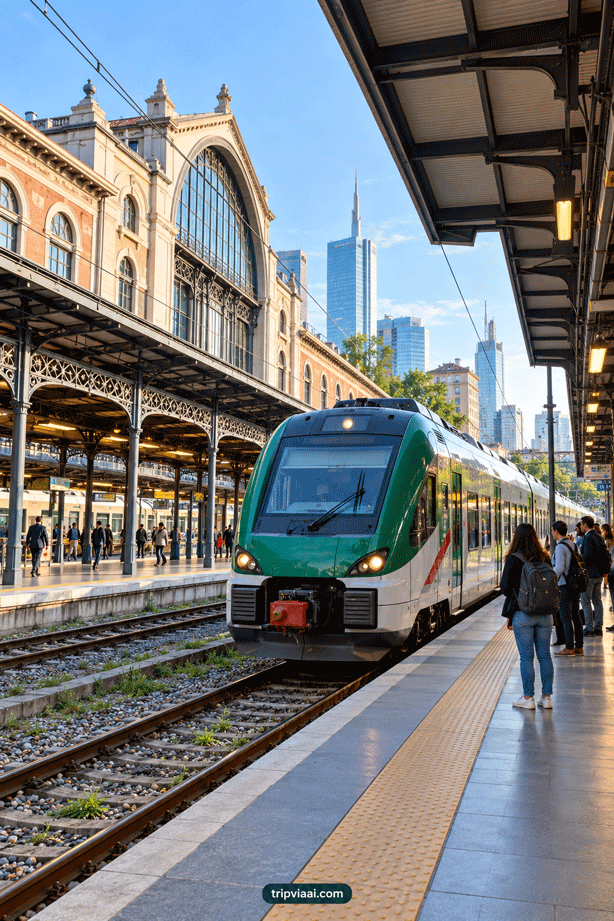
Milano Cadorna Railway Station
Milano Cadorna is another useful departure point, particularly if you are staying near central Milan or can reach this station more easily from your accommodation. Direct regional trains connect Cadorna with Como Lago, a station close to Como’s central waterfront area.
The main advantage is convenience at the destination: Como Lago puts you within easy reach of the lakeside promenade and central attractions. However, compare the full journey before choosing it. Getting to Cadorna from your hotel may take longer than reaching Centrale, depending on your location.
Which station should you choose?
| Your travel plan | Station to check in Milan | Arrival station |
|---|---|---|
| Explore Como city from Centrale | Milano Centrale | Como San Giovanni |
| Explore Como city from Cadorna | Milano Cadorna | Como Lago |
| Visit Varenna | Milano Centrale | Varenna-Esino |
Before booking, compare the departure time, journey duration and ticket price. Also confirm the station name on your ticket. Como San Giovanni and Como Lago are different stations, so they should not be treated as interchangeable.
Practical tip: If you are staying in Milan for several days, check your hotel’s location before deciding which station to use. The easiest departure point is often the one that reduces your total door-to-door travel time, not necessarily the one with the shortest train journey.
Lake Como Train Stations: Como San Giovanni, Como Lago and Varenna-Esino
One of the most important decisions when planning Milan to Lake Como by train is choosing the right arrival station. Lake Como stretches across a large area, and its railway stations serve different towns. Arriving at the wrong station for your itinerary can mean extra walking, additional transport costs or a ferry connection you had not planned for.
Como San Giovanni: Best for exploring Como city
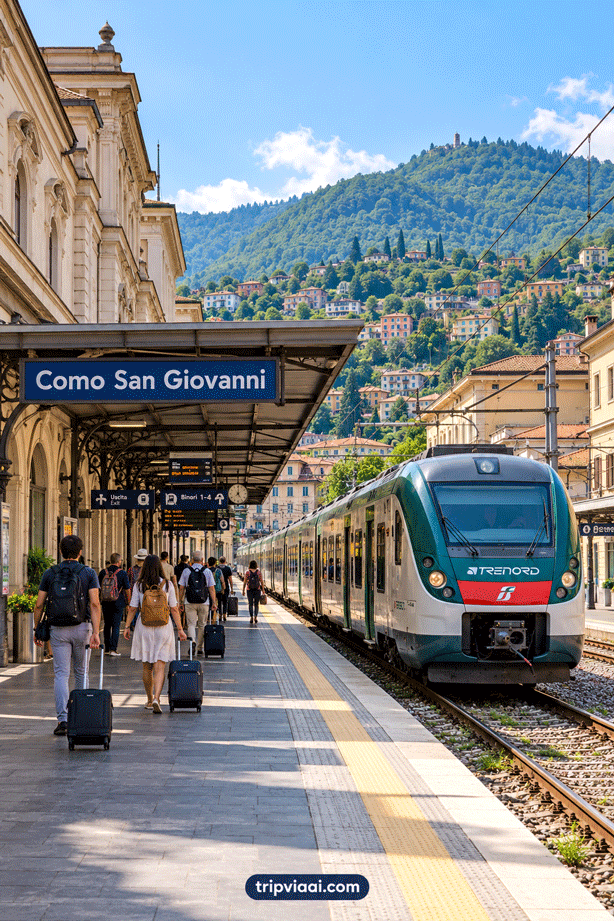
Como San Giovanni Railway Station
Como San Giovanni is served by trains from Milano Centrale. It is a practical arrival point if you want to explore Como’s historic centre, browse local shops, visit cafés and walk along the waterfront. From the station, you can continue on foot towards the central area, although the exact walking time depends on your destination and pace.
This station is particularly convenient if your plan is to spend most of the day in Como rather than travel between several villages.
Como Lago: Best for reaching Como’s waterfront
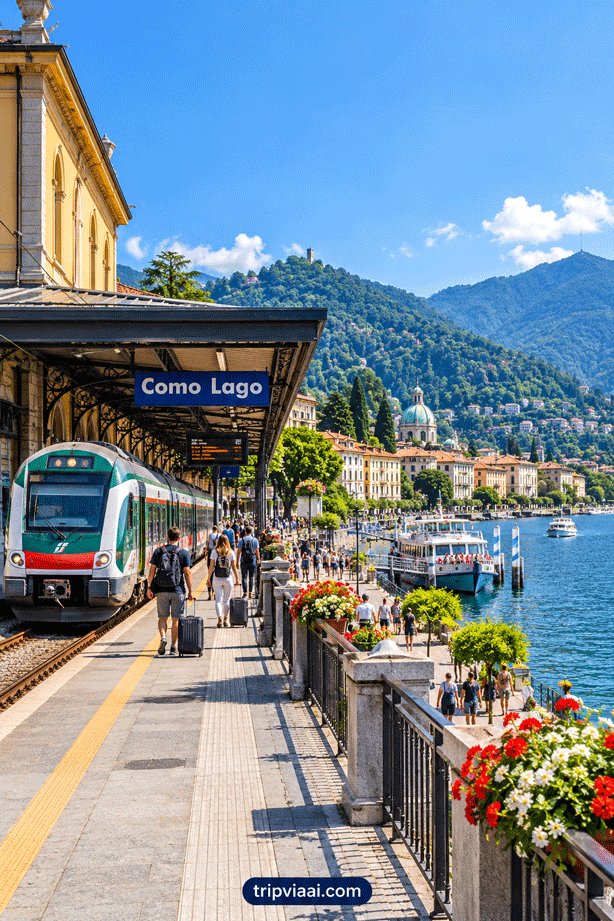
Como Lago Railway Station
Como Lago is the arrival station for direct services from Milano Cadorna. Its central location makes it a convenient choice if you want to reach the waterfront, explore the surrounding streets or check ferry connections.
Although Como San Giovanni and Como Lago both serve Como city, they are separate stations on different routes. Always check the exact station shown on your ticket, especially if you have booked a train based on its departure time.
Varenna-Esino: Best for the central lake area
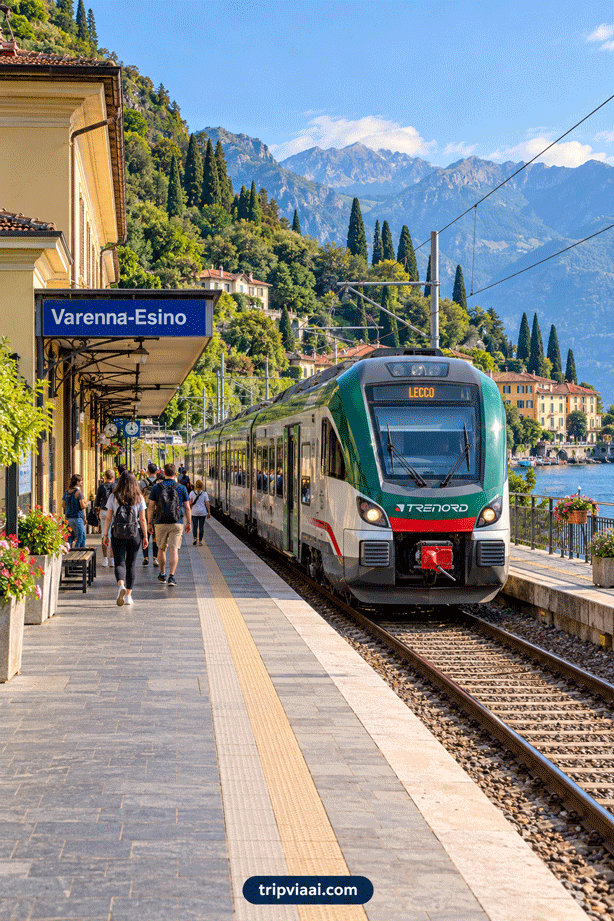
Varenna-Esino Railway Station
Varenna-Esino is the station to consider if you want to visit Varenna, a picturesque village on Lake Como’s eastern shore. From there, you can explore the village on foot and investigate ferry services to destinations such as Bellagio, depending on the day’s timetable.
Remember that the railway station and ferry terminal are separate locations. Allow time to reach the waterfront, check ferry departures and return to the station for your journey back to Milan.
Which station is right for your trip?
| Your main plan | Arrival station to consider |
|---|---|
| Explore Como’s historic centre | Como San Giovanni |
| Visit Como’s waterfront from Cadorna | Como Lago |
| Explore Varenna and nearby central-lake destinations | Varenna-Esino |
| Visit Bellagio | Train to a suitable lakeside town, then onward transport |
For a first-time visitor, choose the station according to the main place you want to see. A simple itinerary with one main destination is usually easier to manage than attempting to cover several towns without checking the connections.
Milan to Lake Como Train Timetable and Frequency
When planning Milan to Lake Como by train, checking the timetable is just as important as choosing the right station. Train frequency and journey duration depend on your route, travel date and selected departure. A service that works well for a weekday visit may not offer the same convenient timing on a weekend or public holiday.
How often do trains run?
Regional services connect Milan with Como and Varenna, and direct departures are available on these routes. However, you should check the live timetable for your intended date rather than rely on a fixed frequency. Not every departure necessarily has the same journey time, and some services may have different operating patterns.
Use the official Trenord website or app to search for your exact route:
- Milano Centrale to Como San Giovanni
- Milano Cadorna to Como Lago
- Milano Centrale to Varenna-Esino
Enter the departure station and arrival station separately. Searching only for “Milan to Lake Como” can make it harder to identify the station that best suits your itinerary.
How to read the timetable correctly
Before buying a ticket, check these details:
- Departure time: Choose a train that gives you enough time for sightseeing.
- Arrival time: Consider how long it will take to walk from the station to your first attraction.
- Direct or connecting service: A direct train can simplify your trip and reduce the risk of missing a connection.
- Return departure: Check the return options before leaving Milan, particularly if you plan to take a ferry.
- Travel-date changes: Recheck the timetable close to your trip in case planned engineering works or service changes affect your route.
What time should you leave Milan?
For a full day of sightseeing, an earlier morning departure usually gives you more flexibility. If you plan to visit only Como city, you may not need to leave as early as someone planning to combine Varenna with a ferry trip to Bellagio.
Practical tip: Plan your day around confirmed train departures rather than assuming you can catch another train immediately whenever you are ready to return.
To leave enough room for sightseeing, ferry connections, and unexpected delays, see our guide on How to Build a Flexible Travel Itinerary That Actually Works.
Milan to Lake Como Train Ticket Prices and Booking Guide
The cost of Milan to Lake Como by train depends on your arrival station, ticket type and selected journey. Before purchasing, compare the fare for Como San Giovanni, Como Lago and Varenna-Esino rather than assuming that every route costs the same.
For reference, Trenord has listed starting fares of approximately €5.40 for journeys from Milano Centrale to Como San Giovanni and Milano Cadorna to Como Lago, and approximately €7.40 for Milano Centrale to Varenna-Esino. These are indicative starting prices, not guaranteed fares for every departure. Check the official booking system for your travel date to confirm the current fare and ticket conditions.
Where can you buy train tickets?
You can check available services and ticket options through the official Trenord website or app, or use ticket machines and ticket offices where available. Online booking is useful because you can compare departure times before reaching the station.
How to book the correct ticket
- Enter the exact stations. Select Milano Centrale or Milano Cadorna as your departure station and the correct arrival station.
- Choose your travel date. Check the available departures for the actual day of your trip.
- Compare journey options. Look at the arrival time, any transfers and the total journey duration.
- Read the ticket conditions. Confirm validity, changes or refund rules, and whether any validation step is required.
- Keep your ticket accessible. If you purchase digitally, follow the instructions provided with that ticket.
Do you need to book in advance?
Regional train tickets may be available close to departure, but you should check the conditions of the specific ticket you intend to buy. Booking online ahead of time can make planning easier, even when advance purchase is not essential.
Remember that your railway ticket generally does not include ferry travel automatically. If you plan to continue to Bellagio or another lakeside village, check ferry fares and schedules separately unless your ticket explicitly includes that transport.
Milan to Lake Como Train Time and Distance
The journey time for Milan to Lake Como by train depends on the town you are visiting and the railway station you choose. Como city is generally the simpler option for a straightforward day trip, while Varenna is useful if you want to explore the central lake area and potentially continue by ferry.
How long does the train journey take?
| Route | Approximate train time | Best for |
|---|---|---|
| Milano Centrale → Como San Giovanni | Around 40 minutes | Exploring Como city |
| Milano Cadorna → Como Lago | Around 60 minutes | Reaching Como’s waterfront |
| Milano Centrale → Varenna-Esino | Around 64 minutes | Visiting Varenna |
These are approximate journey times, not guarantees for every departure. Always check the timetable for your chosen date, as individual services may take longer or follow different schedules.
How far is Lake Como from Milan by train?
There is no single distance for the entire lake because Lake Como covers a broad area with several towns and railway stations. The distance and travel time to Como city differ from those to Varenna. Your final destination matters more than a general distance estimate.
Why your total travel time may be longer than the train ride
The train duration is only one part of your journey. Allow extra time for:
- Travelling from your hotel to Milano Centrale or Milano Cadorna.
- Finding the correct platform and boarding your train.
- Walking from the arrival station to the waterfront or historic centre.
- Reaching the ferry terminal if you plan to visit another town.
- Returning to the railway station before your chosen departure.
For example, a short train journey to Como can work well for a relaxed city visit, while a trip to Varenna followed by a ferry to Bellagio requires more coordination. Compare the complete door-to-door journey instead of choosing a route solely because its train ride is shorter.
Practical tip: When checking Milan to Lake Como by train journey times, plan your sightseeing around the arrival and return times shown in the official timetable. This will help you decide how much time you can realistically spend at your destination.
Best Lake Como Towns to Visit by Train
Choosing the right town is just as important as choosing your train. When planning Milan to Lake Como by train, think about how you want to spend your day: exploring a historic city, enjoying a quiet lakeside village or visiting several destinations connected by ferry. Each option offers a different experience, and the best choice depends on your available time and travel style.
Como: Best for a simple, flexible day trip
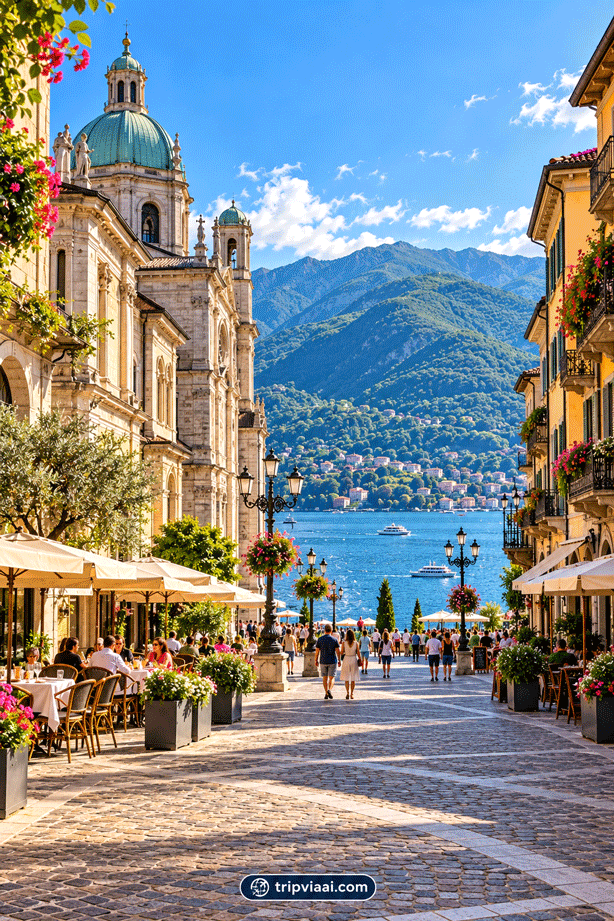
Como, Lombardy, Italy – Historic Streets, Lake Views & Alpine Scenery
Como is a practical choice for first-time visitors who want a manageable itinerary. You can explore the historic centre, admire the cathedral area, browse local shops and walk along the waterfront. Restaurants and cafés make it easy to take breaks without needing to coordinate several transport connections.
Choose Como if you prefer to spend most of the day in one place and return to Milan without building your itinerary around ferry departures.
Varenna: Best for a picturesque village
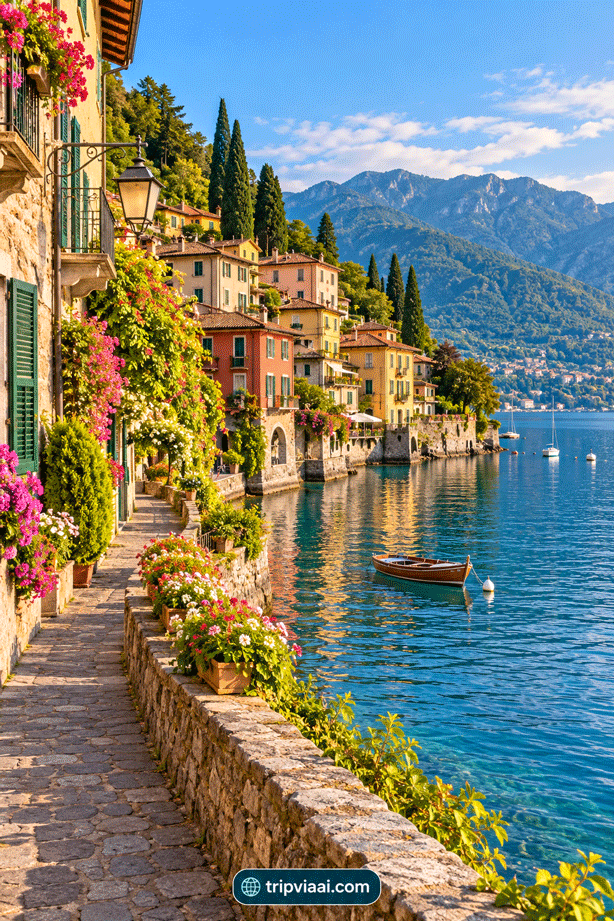
Varenna, Lake Como, Italy: A Picturesque Lakeside Village
Varenna is known for its colourful waterfront buildings, narrow lanes and beautiful views across the lake. It is a good option for travellers who prefer a smaller village atmosphere and want opportunities for lakeside walks and photography.
You can reach Varenna-Esino by train from Milano Centrale on direct services. From there, allow time to walk to the village centre and waterfront.
Bellagio: Best for a classic Lake Como experience
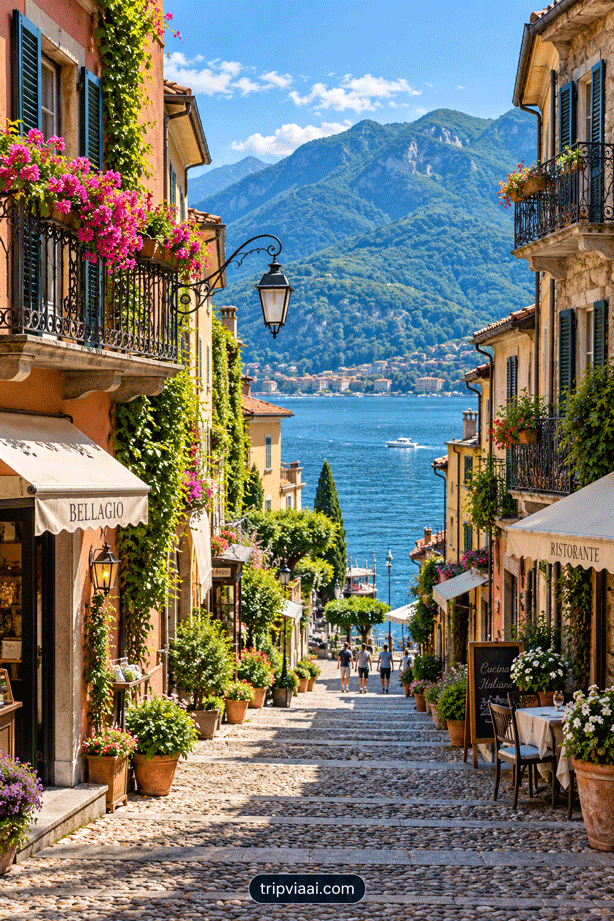
Bellagio, Lake Como, Italy: A Charming Cobblestone Street with Stunning Lake Views
Bellagio is famous for its waterfront setting, attractive streets and views across the meeting point of the lake’s two southern branches. It can be a rewarding addition to your itinerary, but it requires more planning because Bellagio does not have a railway station.
You will need to travel by train to a suitable nearby town, then continue by ferry or another available transport option. Check the connection schedule before deciding how much time to spend there.
Which town should you choose?
| Your preference | Suggested destination |
|---|---|
| Simple itinerary with fewer connections | Como |
| Village scenery and lakeside walks | Varenna |
| A ferry-based visit to a famous lakeside town | Bellagio |
If this is your first trip and you have only one day, choose one main destination rather than trying to see all three. Como is usually easier for a flexible city visit, while Varenna is a good starting point for exploring the central lake area by ferry.
Is There a High-Speed Train from Milan to Lake Como?
Travellers researching Milan to Lake Como by train sometimes assume that a high-speed train is the quickest option. For the usual routes to Como city and Varenna, however, direct regional services are often the more practical choice. The important factor is not simply the train’s maximum speed, but whether it takes you directly to the town you want to visit.
Are high-speed trains necessary?
For a short journey from Milan to Como or Varenna, a dedicated high-speed service is generally unnecessary. Regional trains serve these destinations directly on suitable departures, so you can avoid adding a transfer just to use a faster train for part of the journey.
The best route depends on your destination:
- Como San Giovanni: Check direct regional trains from Milano Centrale.
- Como Lago: Check direct services from Milano Cadorna.
- Varenna-Esino: Check direct regional trains from Milano Centrale.
Always confirm the service for your travel date. Timetables, journey durations and available departures can change.
What should you compare before booking?
Compare the total journey time, ticket price and arrival station. A direct regional train can be more convenient than a journey involving a transfer, even if another service appears faster on one section of the route.
Also remember that reaching a railway station does not necessarily mean you have reached your final destination. If you want to visit Bellagio, you will need to plan onward transport because Bellagio does not have a railway station.
My recommendation: For most first-time visitors, choose a direct regional train that matches your itinerary instead of searching specifically for a high-speed service. Confirm the latest timetable and fare through the official railway booking system before travelling.
Best Train Route for a Lake Como Day Trip
Choosing the right itinerary can make the difference between a relaxed day by the lake and a trip spent rushing between stations. When planning Milan to Lake Como by train, decide whether you want to explore one town thoroughly or combine a lakeside village with a ferry ride. For a first visit, both approaches can work well, but they require different amounts of planning.
Option 1: A relaxed day in Como
Best for first-time visitors, families and travellers who prefer fewer connections.
- Morning: Take a direct train to Como San Giovanni or Como Lago, depending on your departure station.
- Late morning: Explore Como’s historic centre and cathedral area.
- Lunch: Choose a local restaurant or café near the centre.
- Afternoon: Walk along the waterfront, browse shops or enjoy a leisurely break beside the lake.
- Return: Walk back to your railway station and take a suitable train to Milan.
This option is relatively simple because you can enjoy the city without coordinating a ferry departure.
Option 2: Varenna with a possible ferry trip
Best for travellers who want village scenery and views across the lake.
- Morning: Take a direct train from Milano Centrale to Varenna-Esino on a suitable service.
- Late morning: Walk into Varenna and explore its waterfront and historic lanes.
- Lunch: Stop at a local café or restaurant.
- Afternoon: If the timetable allows, take a ferry to Bellagio or another suitable destination.
- Return: Allow enough time to reach Varenna-Esino and catch your planned train to Milan.
Check the ferry timetable before committing to this itinerary. Services and departure times may vary by date and season, and you should leave a buffer between your ferry arrival and train departure.
Which itinerary is better?
Choose Como for a straightforward, flexible day. Choose Varenna if your priority is a picturesque village and you are comfortable coordinating onward transport. Avoid trying to fit Como, Varenna and Bellagio into a single day unless you have checked every connection and are happy with limited time in each place.
Returning to Milan: Train Timetables, Last Trains and Common Mistakes
Planning the return journey is just as important as choosing your outbound train. After spending the day exploring the lake, you do not want to discover that your preferred departure leaves too little time to reach the station from the waterfront. A little preparation can help you avoid unnecessary stress, especially if your itinerary includes a ferry.
Check the return timetable before leaving Milan
When planning Milan to Lake Como by train, look up the return service for your exact arrival station. If you travel to Como San Giovanni, check departures from Como San Giovanni; if you arrive at Como Lago, check Como Lago services. For Varenna, use Varenna-Esino when searching.
Do not assume that the last train leaves at the same time every day. Departure times and service patterns can vary, so check the official timetable for your travel date. If you plan to return in the evening, identify a suitable departure before you start sightseeing.
Milan to Lake Como Day Trip Budget and Money-Saving Tips
The total cost of Milan to Lake Como by train depends on which town you visit, where you eat and whether you add a ferry trip. Your train ticket may be only one part of the budget, so estimate the full day rather than comparing railway fares alone.
What should you include in your budget?
| Expense | What affects the cost |
|---|---|
| Return train tickets | Departure station, destination and ticket conditions |
| Food and drinks | Café stops, lunch and snacks |
| Ferry tickets | Whether you visit another lakeside town |
| Local transport | Any buses, taxis or other onward connections |
| Attractions | Entry fees for any paid sights you choose to visit |
| Extra spending | Souvenirs, refreshments or unexpected changes |
For a simple visit to Como city, you may be able to keep the itinerary relatively straightforward by using the train and exploring on foot. A trip that includes Varenna and a ferry to Bellagio requires more coordination and a separate allowance for onward transport.
How to save money without missing the experience
1. Compare routes before buying. Check the fares to Como San Giovanni, Como Lago and Varenna-Esino for your actual travel date. The cheapest train is not always the most convenient if reaching its departure station adds time and transport costs.
2. Choose one main destination. Visiting Como city alone can reduce the need for additional transport. If you prefer Varenna, decide in advance whether a ferry trip fits your budget and schedule.
3. Plan meals realistically. Set aside money for lunch, drinks and a snack rather than assuming you will find the cheapest option when you arrive. You can compare restaurant menus and cafés before choosing where to eat.
4. Check ferry fares separately. Do not assume your railway ticket includes boat travel. Review the relevant ferry route, ticket conditions and operating times before adding another town to your itinerary.
5. Keep a small contingency budget. Extra refreshments, an alternative connection or an unexpected change can increase your spending. A little flexibility makes the day less stressful.
Example of a practical budget plan
Instead of using one fixed price for every traveller, build your budget around your own itinerary:
- Transport: Return train fare plus any ferry or local transport.
- Meals: Lunch, drinks and optional snacks.
- Activities: Entry fees for attractions you decide to visit.
- Reserve: A small amount for unexpected expenses.
Check current fares and attraction prices before travelling, as costs can change. This approach gives you a more realistic estimate than relying on an old online budget.
Train tickets are only one part of your spending, so check our guide to Hidden Travel Costs Most Travelers Forget to Budget For to help account for extra expenses before your trip.
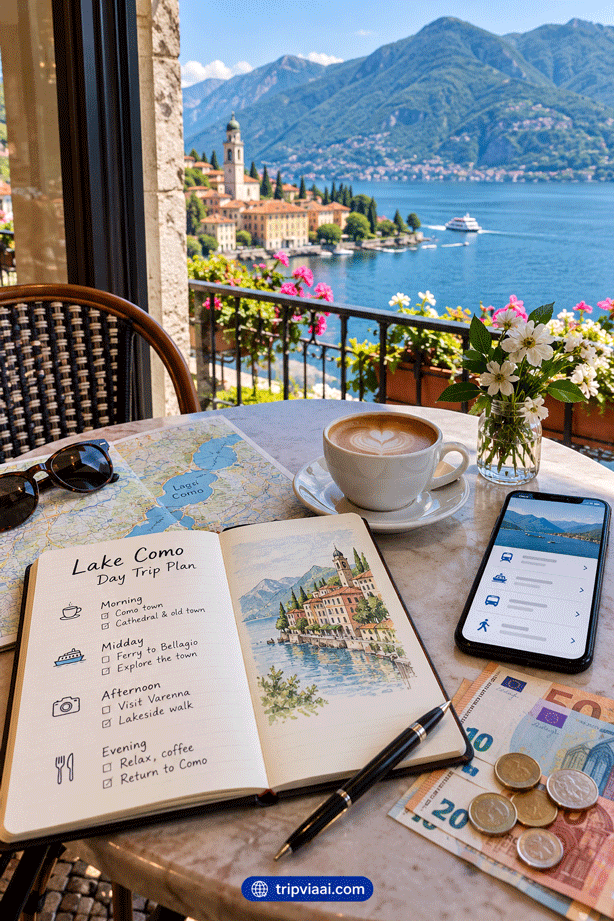
Planning a Day Trip to Lake Como: Itinerary, Transport & Budget Tips
Practical Travel Tips for a Smooth Lake Como Trip
A well-planned Milan to Lake Como by train journey should leave you enough time to enjoy the destination instead of constantly checking the clock. Small preparations before leaving Milan can make the day more comfortable, especially if you are visiting for the first time or combining a train journey with a ferry.
Check the weather and pack appropriately
Lake Como is a destination where much of the sightseeing happens outdoors. Check the forecast before leaving and carry a light waterproof layer if rain is possible. Comfortable walking shoes are useful for historic streets, steps and uneven paving. In warmer weather, bring water, sun protection and clothing suitable for spending time beside the lake.
Keep your travel details accessible
Save your ticket or booking confirmation and make sure you know your departure and arrival stations. If your ticket is digital, follow the specific instructions for displaying or validating it. Keep your phone charged so you can check updated train information and ferry schedules when needed.
Plan around opening times and ferry schedules
Not every attraction or transport service operates on the same timetable throughout the year. If you want to visit a particular attraction or travel by boat, check its operating hours and service schedule before building the rest of your day around it.
Make your itinerary realistic
Avoid scheduling every hour too tightly. Leave time for lunch, photographs, unexpected delays and the walk between the railway station and the places you want to visit. If you plan to catch a ferry, allow enough time to reach the terminal and check the correct departure point.
Consider your travel companions
- Families with children: A single-town itinerary may be easier than managing multiple train and ferry connections.
- Older travellers: Check walking distances, steps and slopes around your chosen station and town.
- Photography enthusiasts: Allow extra time at the waterfront instead of rushing between destinations.
- Travellers on a tight budget: Compare transport costs and meal options before departure.
- Visitors with limited time: Prioritise one main attraction or town rather than trying to see everything.
Final practical tip: Save the official train timetable and your return options before starting your trip. A little preparation helps you adapt if the weather changes, a ferry is delayed or you decide to spend longer exploring.

What to Pack for a Day Trip to Lake Como: Essential Travel Checklist
Common Mistakes to Avoid When Travelling from Milan to Lake Como
Even a simple day trip can become stressful if you choose the wrong station, underestimate connection times or leave your return journey until the last minute. Before starting Milan to Lake Como by train, review these common mistakes so you can spend more time exploring and less time correcting your plans.
Mistake 1: Booking a ticket without checking the destination station
“Como” can refer to different railway arrival points. Confirm whether your train arrives at Como San Giovanni or Como Lago, and make sure that station suits your itinerary. If you are visiting Varenna, look specifically for Varenna-Esino.
Mistake 2: Assuming Bellagio has a railway station
Bellagio is a lakeside destination, not a train station. You need to plan onward transport, commonly by ferry from a suitable town. Check the route and operating schedule before adding Bellagio to your day.
Mistake 3: Underestimating walking and transfer times
The train station may not be beside every attraction, accommodation or ferry terminal. Allow time to walk between locations, find the correct departure point and board your next service.
Mistake 4: Planning too many towns in one day
Como, Varenna and Bellagio each offer different experiences, but visiting all three can leave little time to enjoy them. Choose one main destination and add a second only if the connections work comfortably.
Mistake 5: Relying on outdated transport information
Fares, timetables and ferry services can change. Recheck official railway and ferry information for your travel date, and do not assume that an old screenshot or saved timetable is still valid.
Mistake 6: Ignoring the return journey
Before leaving Milan, identify a suitable return service from your intended station. If you plan to take a ferry, allow a buffer before your train departure rather than relying on a tightly timed connection.
For more ways to avoid planning problems, read Travel Itinerary Mistakes That Ruin Your Vacation before finalising your day-trip schedule.
Primary keyword tracking: 14 exact occurrences so far, all bolded. Two more main image prompts are still needed to reach the planned total of eight; Point 3’s three supporting images remain separate.
Transport Comparison: Which Route Is Best for You?
The right route for Milan to Lake Como by train depends on your main destination, your departure point in Milan and whether you plan to travel onward by ferry. Use this comparison to narrow down your options before checking the live timetable.
| Route | Approx. train time | Best for | Main consideration |
|---|---|---|---|
| Milano Centrale → Como San Giovanni | Around 40 minutes | Exploring Como city | Check the walk to your chosen attraction |
| Milano Cadorna → Como Lago | Around 60 minutes | Como’s waterfront | Choose it if Cadorna is convenient for you |
| Milano Centrale → Varenna-Esino | Around 64 minutes | Varenna and the central lake | Allow time to reach the village and ferry terminal |
Journey times are approximate and may vary by departure. Confirm current services and fares for your travel date.
Quick decision guide
- Choose Como San Giovanni if you are leaving from Centrale and want to explore Como city.
- Choose Como Lago if Cadorna is easier to reach and you want to visit Como’s waterfront.
- Choose Varenna-Esino if you want a village-focused trip and may add a ferry journey.
- Plan Bellagio separately because it does not have a railway station; onward transport is required.
Compare your complete journey, including the trip to your departure station, walking time after arrival and any ferry connections. The shortest train journey is not always the easiest overall itinerary.
Conclusion
A day trip from Milan to Lake Como can be straightforward when you choose the right station and plan your connections carefully. For a flexible city visit, Como is a practical choice; for village scenery and possible ferry connections, Varenna is worth considering. Bellagio requires additional transport because it has no railway station.
Before travelling, compare current fares, check the timetable for your exact date, read your ticket conditions and plan the return journey. A realistic itinerary will give you more time to enjoy the scenery without rushing between destinations.
With the right preparation, Milan to Lake Como by train can be a convenient way to experience one of northern Italy’s most beautiful lake regions.
For more practical travel guides, smart planning tips, and money-saving travel advice, visit TripViaAI — tripviaai.com.