
 Posted by
 Introduction
How to plan a trip sounds simple until you actually sit down and start doing it. What begins as an exciting travel idea can quickly turn into dozens of browser tabs, endless destination comparisons, hotel research, flight tracking, and conflicting advice from travel blogs and social media. Before long, many travellers feel overwhelmed before they have even booked anything.
A few years ago, one of my friends decided to plan his first international holiday. During the first week, he was excited and motivated. By the second week, he had watched countless travel videos, compared hundreds of hotel options, and changed destinations multiple times. Instead of getting closer to booking the trip, he became more confused because every new recommendation created another decision.
The truth is that most travellers do not struggle because they lack information. They struggle because they have too much of it.
Understanding how to plan a trip is not about creating a perfect itinerary or researching every possible option. It is about following a simple process that helps you make confident decisions without unnecessary stress. Similar planning principles are discussed in Beginner Friendly Travel Itinerary to Plan Your First Trip Easily, where simplicity often leads to a much better travel experience.
If travel planning has ever felt more exhausting than exciting, these practical strategies will help you stay organised, reduce stress, and enjoy the journey long before you arrive at your destination.
Plan Your Trip With Confidence
Learning how to plan a trip becomes much easier when you focus on priorities instead of perfection. By setting clear goals, managing your budget, and creating a realistic itinerary, travellers can enjoy the planning process instead of feeling overwhelmed by it.
Quick Overview Table
| Planning Area | What to Focus On |
|---|---|
| Travel Goals | Define the purpose of the trip |
| Budget | Create spending boundaries |
| Destination | Commit to one choice |
| Bookings | Secure essentials first |
| Itinerary | Prioritise experiences |
| Flexibility | Leave room for surprises |
Start With the Experience You Want, Not the Destination
One of the biggest mistakes people make while learning how to plan a trip is choosing a destination before deciding what they actually want from the experience. This sounds harmless, but it often creates confusion because every destination starts looking attractive.
Imagine asking five different travellers where you should go on holiday. One recommends Italy for its food, another suggests Iceland for its landscapes, while someone else insists that Japan should be at the top of your list. None of them are wrong. The problem is that their recommendations are based on their travel goals, not yours.
When travellers start with a clear purpose, decision-making becomes much easier. Someone looking for relaxation will naturally choose different experiences than someone searching for adventure. A couple celebrating an anniversary will create a completely different itinerary from a solo traveller focused on photography or local culture.
Understanding how to plan a trip starts with identifying the experience you want first. Once that becomes clear, hundreds of unnecessary options automatically disappear, making the entire planning process far more manageable.
Stop Consuming Endless Travel Content
Travel inspiration is useful until it becomes a source of confusion.
Many travellers spend weeks watching destination videos, reading travel blogs, browsing social media, and saving recommendations from creators around the world. At first, it feels productive because new information is constantly being collected. Eventually, however, every new recommendation creates another decision.
A traveller researching Paris may watch ten different videos and receive ten completely different itineraries. One creator says the Eiffel Tower is essential. Another claims it is overrated. One focuses on luxury experiences, while another promotes budget travel. After a while, it becomes difficult to know which advice actually applies to your trip.
This is why experienced travellers stop researching once they have enough information to make informed decisions. Learning how to plan a trip is not about collecting endless opinions. It is about making decisions and moving forward with confidence. Too much information often creates more stress than too little.
Create Financial Boundaries Before Anything Else
Many travel planning mistakes happen because travellers focus on attractions before they understand their budget.
A traveller may spend hours building an itinerary filled with day trips, restaurants, sightseeing experiences, and guided tours, only to realise later that the total cost is far beyond what they can comfortably afford. At that point, the entire plan needs to be adjusted.
I once met a traveller who had organised nearly every activity for a two-week holiday. The itinerary looked fantastic on paper, but he had never calculated daily expenses. Transportation, meals, small purchases, and unexpected costs quickly added up. Halfway through the trip, he was forced to skip several experiences simply because he had underestimated the total budget.
That experience reinforced an important lesson. Learning how to plan a trip successfully begins with understanding financial limits. A budget is not a restriction. It is a tool that creates clarity and helps travellers make smarter decisions. Similar budgeting principles are discussed in How to Save Money While Traveling Anywhere, where proper planning helps reduce financial stress before and during a trip.

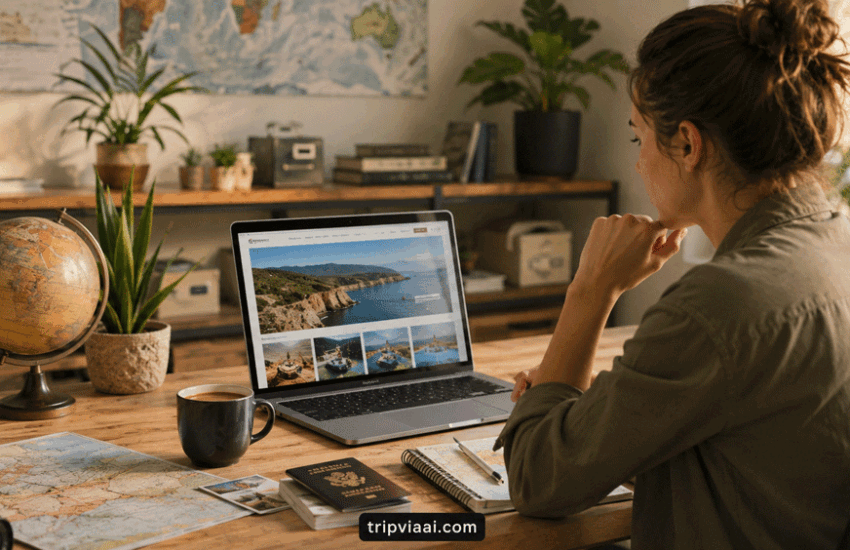
Traveller Planning the Perfect Holiday Itinerary at a Cozy Café
Commit to One Destination and Stop Looking Back
One hidden reason many travellers struggle with how to plan a trip is the habit of constantly changing destinations. A traveller may spend several days researching Spain, then suddenly switch to Greece after seeing a social media post. A week later, another video makes Portugal look more appealing, and the entire process starts from the beginning again.
This cycle creates the illusion of progress, but very little planning is actually happening. Every destination has strengths and weaknesses. Every destination has attractions, unique experiences, and reasons to visit. Waiting for the perfect choice often leads to decision fatigue rather than a better holiday.
A few years ago, I spent nearly two weeks comparing multiple destinations for a short European getaway. After reading reviews, comparing costs, and watching travel videos, I finally realised that the differences between my top choices were much smaller than I had imagined. The moment I committed to one destination, everything became easier. Flights were booked, accommodation was selected, and the itinerary started taking shape.
Travellers who understand how to plan a trip effectively know that commitment is often more valuable than endless comparison. Once you choose a destination that fits your goals and budget, stop looking back and focus on making that trip memorable.
Treat Travel Planning Like a Process, Not a Weekend Task
Many people unintentionally make travel planning stressful because they try to organise everything in one sitting. Flights need research, accommodation requires comparison, transportation must be considered, and activities need prioritisation. Trying to complete all of these tasks in a single weekend can quickly become exhausting.
Think about any successful project. Whether it is renovating a house, launching a business, or preparing for an important exam, progress usually happens through smaller steps completed over time. Travel planning works exactly the same way.
Instead of attempting to finish everything immediately, divide the process into manageable stages. Spend one week researching transportation. Use another week to compare accommodation options. Later, focus on attractions, local transportation, and practical preparation. This method prevents information overload and helps travellers make more thoughtful decisions.
Understanding how to plan a trip becomes much easier when you stop viewing it as a single task and start treating it as a structured process. Not only does this reduce stress, but it also improves the quality of the decisions you make throughout the journey.
Focus On Highlights Instead of Filling Every Hour
One of the most common mistakes new travellers make is trying to maximise every minute of their holiday. Their itinerary becomes packed with attractions, museums, restaurants, tours, and sightseeing locations from early morning until late evening.
On paper, the schedule looks impressive.
In reality, it often feels exhausting.
During a trip to London, I met a traveller who planned almost ten major attractions in a single day. By the afternoon, he was rushing between locations without actually enjoying any of them. Instead of creating meaningful memories, he spent most of his time checking maps, monitoring transportation schedules, and worrying about what came next.
This experience highlights an important lesson about how to plan a trip. Great holidays are not measured by the number of attractions visited. They are measured by the quality of the experiences you have.
Rather than trying to see everything, identify a few experiences that truly matter and build your itinerary around them. This approach creates a more relaxed travel experience and often leads to stronger memories. It is also one of the reasons why 3 Day Travel Itinerary for Beginners That Makes Travel Easy encourages travellers to prioritise experiences rather than overcrowding every day with activities.
Recommended Travel Planning Products
While organising your travel plans, products such as DJI Mini Drone and DJI Osmo Pocket 3 can fit naturally into a modern traveller’s travel setup, especially for documenting memorable experiences throughout the journey.
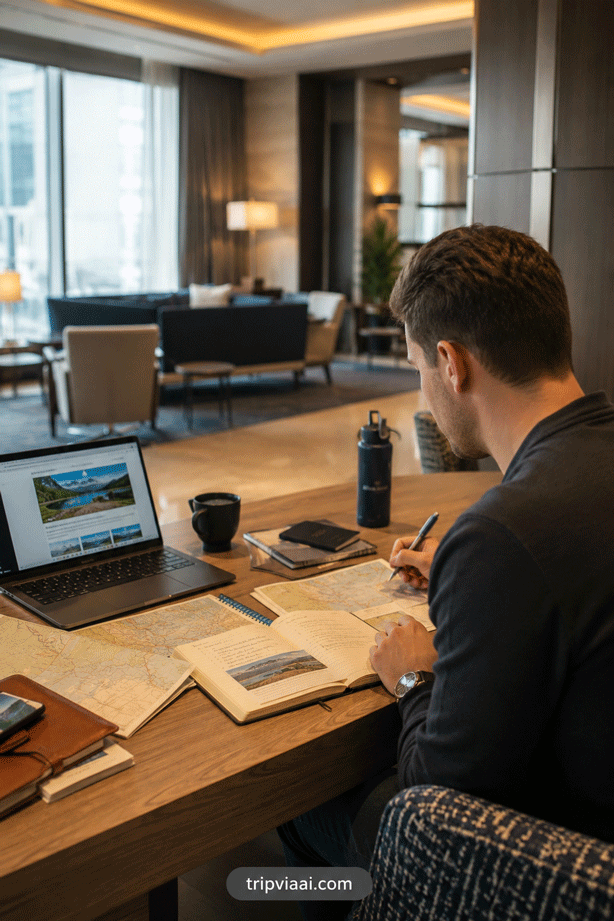
Traveller Reviewing a Travel Itinerary in a Modern Hotel Lounge
Leave Space for Unexpected Experiences
One of the most valuable travel lessons I have learned over the years is that some of the best memories are never planned.
When people first learn how to plan a trip, they often believe that every hour should be organised. Flights, hotel reservations, sightseeing plans, restaurant bookings, and transportation schedules all seem important, so they try to fit everything neatly into a timetable. While structure is useful, an itinerary that leaves no room for flexibility can sometimes limit the travel experience rather than improve it.
During a coastal holiday a few years ago, I planned an afternoon around visiting a famous attraction. On the way there, I stumbled across a small local market filled with handmade products, street food, and live music. What was supposed to be a quick stop turned into one of the highlights of the entire trip. If every minute of the day had already been scheduled, that experience would never have happened.
Travellers who leave some free space in their itinerary often discover hidden cafés, local festivals, scenic viewpoints, and unexpected conversations that become unforgettable memories. Understanding how to plan a trip does not mean controlling every moment. It means creating enough structure to stay organised while leaving enough flexibility to enjoy surprises along the way.
Stop Comparing Your Trip to Other People’s Trips
Social media has changed the way people travel. It provides endless inspiration, but it also creates unrealistic expectations.
Many travellers spend months comparing their plans to those of influencers, bloggers, and content creators. They see luxury hotels, expensive restaurants, private tours, and perfectly edited travel photos. Gradually, they begin questioning their own itinerary.
The problem is that every traveller has different goals, budgets, and interests.
A couple planning a relaxing holiday should not compare their itinerary to a backpacker travelling through multiple countries. A family travelling with children should not feel pressured to follow the same schedule as a solo traveller focused on adventure activities. Every journey serves a different purpose.
One of the biggest breakthroughs in understanding how to plan a trip comes when travellers stop seeking validation from other people and start building itineraries around their own interests. The most successful trips are rarely the ones that look impressive online. They are the ones that create meaningful experiences for the people taking them.
When you stop comparing your travel plans to everyone else’s, decision-making becomes easier and the entire planning process feels much less stressful.
Make Major Decisions First and Small Decisions Later
Many travellers accidentally make planning more difficult by focusing on minor details before handling the major ones.
A traveller may spend hours researching restaurants before booking accommodation. Someone else may create a sightseeing schedule before deciding how they will travel between destinations. These activities feel productive, but they rarely move the planning process forward.
Experienced travellers follow a different approach.
They focus on the major decisions first:
- Destination
- Budget
- Flights
- Accommodation
- Transportation
Once these foundations are in place, the smaller details become much easier to organise. Restaurant choices, shopping areas, cafés, and optional attractions can all be planned later.
Learning how to plan a trip becomes much less overwhelming when you prioritise decisions according to importance. This is also one of the reasons why 7 Day Travel Itinerary for Beginners That Makes Travel Easy focuses on creating a strong framework first before worrying about the smaller details.
Recommended Travel Planning Products
For longer journeys and more organised travel preparation, products such as EcoFlow Power Station and Portable Espresso Maker can fit naturally into a traveller’s overall travel setup.

Organising Travel Documents Before Your Trip
Accept That Something Will Probably Go Wrong
One of the biggest reasons travellers feel stressed during how to plan a trip research is because they expect everything to go perfectly. They imagine flights arriving on time, weather conditions staying ideal, transportation running smoothly, and every reservation working exactly as expected.
Unfortunately, travel rarely works that way.
Flights get delayed. Attractions close unexpectedly. Weather forecasts change. Transportation schedules shift. These situations are frustrating, but they are also a normal part of travelling.
A first-time traveller often sees these situations as disasters. Experienced travellers see them as inconveniences.
The difference comes from expectations.
People who understand how to plan a trip effectively know that flexibility is just as important as organisation. They leave extra time between important activities, keep backup plans available, and avoid building itineraries that depend on everything going perfectly.
Some of the most memorable travel stories actually begin with unexpected changes. A cancelled activity may lead you to discover a hidden attraction. A delayed train may create an opportunity to explore a neighbourhood you never intended to visit.
Good planning prepares you for the unexpected rather than pretending it will never happen.
Keep Everything Organised in One Place
A surprising number of travel problems occur because important information is scattered across multiple locations.
Flight confirmations may be hidden in one email folder. Hotel reservations might be stored in screenshots. Transportation details could be saved in a notes app. When travellers need information quickly, finding it becomes stressful.
I once watched a traveller spend nearly twenty minutes searching for a hotel confirmation while standing at reception after a long international flight. The reservation existed, but locating it became unnecessarily frustrating because the information was spread across several different apps.
A simple organisational system solves this problem.
Whether you prefer cloud storage, a travel app, or a dedicated planning document, keep all essential information together. Flight details, accommodation bookings, transportation reservations, travel insurance information, and emergency contacts should be easy to access throughout the journey.
Learning how to plan a trip is not only about choosing destinations and attractions. It is also about creating systems that make travelling smoother when unexpected situations arise.
Remember Why You Wanted to Travel in the First Place
At some point during the planning process, many travellers forget why they started.
The excitement of exploring a new destination becomes buried beneath hotel comparisons, booking confirmations, budget calculations, transportation research, and itinerary adjustments. What should feel exciting starts feeling like work.
Whenever this happens, take a step back.
Remember that travel is not a competition. You do not need to visit every attraction, stay in the most expensive hotel, or follow the same itinerary as someone else. The purpose of travel is to create experiences, discover new places, and enjoy time away from everyday routines.
Understanding how to plan a trip is not about creating the perfect holiday. It is about creating a realistic plan that allows you to enjoy the experience without unnecessary stress.
Once the essentials are organised, trust your preparation and focus on what really matters. The destination, the experiences, and the memories will always be far more important than a perfectly planned spreadsheet.

Final Travel Itinerary Ready Before Departure
Frequently Asked Questions
How far in advance should I start planning a trip?
Most travellers benefit from starting how to plan a trip preparations two to six months before departure. This provides enough time to compare prices, secure accommodation, and organise transportation without feeling rushed.
What is the biggest mistake people make while planning a trip?
Trying to plan everything at once is one of the biggest mistakes. Breaking the process into smaller steps makes decision-making easier and significantly reduces stress.
How do I avoid feeling overwhelmed during trip planning?
Focus on one task at a time. Choose a destination, create a budget, book essential reservations, and then gradually build your itinerary instead of trying to handle everything simultaneously.
Should I plan every day of my trip?
No. Leaving free time in your itinerary often creates better experiences and allows flexibility for unexpected opportunities.
How detailed should a travel itinerary be?
A travel itinerary should provide structure without becoming restrictive. Include major reservations and activities, but leave room for adjustments when necessary.
Is budgeting really important when planning a trip?
Yes. A realistic budget helps guide accommodation, transportation, and activity choices while preventing unnecessary financial stress during the journey.
Can first-time travellers plan their own trips successfully?
Absolutely. Most first-time travellers can create successful itineraries by focusing on priorities, researching essential information, and avoiding overplanning.
Conclusion
Understanding how to plan a trip is not about creating a perfect itinerary or researching every possible option. It is about following a simple process that helps you make confident decisions without unnecessary stress. When travellers focus on priorities, manage their budget wisely, and leave room for flexibility, the entire planning process becomes far more enjoyable.
The most memorable trips rarely happen because every detail was perfect. They happen because travellers were prepared enough to travel confidently while remaining flexible enough to enjoy unexpected moments along the way. Once the essentials are organised, trust your preparation and focus on the experiences waiting ahead.
If you’re looking for more practical travel guides, itinerary ideas, and beginner-friendly travel advice, explore more resources at tripviaai.com.
4 comments