

 Posted by
 Introduction
Travelling to a country where you don’t speak the local language can create problems in situations that seem simple at first. Asking for directions, checking into a hotel, ordering food, speaking with a taxi driver, or explaining a specific request can become difficult when communication breaks down. AI translation earbuds are designed to make these conversations easier by translating spoken language between people in real time.
But Do AI translation earbuds really work well enough to be useful during an international trip? The answer depends on several factors, including the languages you need, internet connectivity, background noise, accents, speaking speed, and the translation technology used by the device.
If you’re preparing for your first international journey, our Visa Guide for First-Time International Travelers can also help you understand another important part of getting ready before departure.
In this guide, we’ll focus on the real problems travellers face and explain where AI translation earbuds can genuinely help, where they may struggle, when your smartphone could be a better alternative, and what you should check before buying one.
Do AI Translation Earbuds Really Work?
Yes, AI translation earbuds can help travellers communicate across language barriers, especially during simple conversations such as asking for directions, checking into a hotel, ordering food, or speaking with a driver. However, they are not perfect interpreters. Accuracy can be affected by language support, internet connectivity, background noise, accents, speaking speed, and the translation technology being used. Always keep a phone translation app as a backup for important or difficult conversations.
Things to Know Before Using AI Translation Earbuds for International Travel
How AI Translation Earbuds Work in Real Travel Situations
AI translation earbuds are designed to help people communicate when they don’t speak the same language. The earbuds use microphones to pick up speech, while translation software processes the conversation and converts it into another language. Depending on the device, the translation may be heard through the earbuds, displayed in a companion app, or shared between two people using different listening modes.
For a traveller, the technology can be useful in everyday situations rather than complicated conversations. Imagine arriving at a hotel in Tokyo and needing to ask whether your luggage can be stored before check-in. Instead of repeatedly typing sentences into your phone, a compatible translation system may allow you to communicate more naturally.
This is why Do AI translation earbuds really work depends partly on how you use them. They are best treated as a communication aid, not as a perfect human interpreter. Before your trip, learn how the device’s conversation mode, language settings, internet requirements, and companion app work.
When Translation Earbuds Help You Communicate Abroad
The most useful situation for translation earbuds is a short conversation where you know what you want to communicate but don’t know how to say it in the local language. This could happen when checking into a hotel, asking a shopkeeper about a product, explaining a simple request at a restaurant, or asking someone for directions.
For example, imagine you’re in Rome and your hotel room isn’t ready. You want to ask whether the hotel can store your suitcase until the afternoon. A translation device may help you communicate that request without relying entirely on gestures or typing every sentence into a phone.
However, Do AI translation earbuds really work well in every conversation? Not necessarily. Short and clear conversations are generally a more suitable use case than complicated discussions involving technical terms, slang, or multiple people speaking at once.
If you’re travelling somewhere where language could be a major barrier, keeping a translation app on your phone as a backup is still a smart idea.
How to Use Translation Earbuds at Hotels, Restaurants, and Airports
Hotels, restaurants, and airports are three places where language problems can quickly create confusion. At a hotel, you may need to understand check-in instructions or ask about luggage storage. At a restaurant, you might need to ask about ingredients or communicate a simple dietary request. At an airport, you may need help finding a terminal, gate, or service counter.
For example, imagine you’re at an airport in Seoul and a staff member gives you directions in Korean. Translation earbuds may help you understand the basic conversation without stopping to type every sentence into a phone.
This is another situation where Do AI translation earbuds really work can be useful to ask from a practical travel perspective. Before using them, select the correct languages and test the translation in a quieter environment. For important information such as flight changes, immigration instructions, allergies, or medical needs, always confirm the translated information through written or official sources.

Using AI Translation Earbuds at an International Airport
Can Translation Earbuds Handle Different Accents and Speaking Speeds?
Accents and speaking speed can make speech recognition more difficult, especially when you’re communicating with someone whose pronunciation is unfamiliar. A traveller might understand the language generally but still struggle when a local speaker uses a strong regional accent, slang, or speaks quickly.
For example, imagine you’re taking a taxi in Mexico City and the driver gives you several instructions quickly in Spanish. If the earbuds misunderstand one part of the sentence, you could end up with the wrong information about your destination.
This is another reason Do AI translation earbuds really work depends on the situation. If the translation seems unclear, ask the person to speak more slowly and use shorter sentences. You can also repeat the important information through your phone’s translation app and confirm the destination visually.
Before your trip, test the earbuds with the languages you expect to use. Don’t assume that good performance in one language means identical performance across every supported language.
What Happens When Background Noise Makes Translation Difficult?
A crowded airport, busy restaurant, train station, or street market can make translation harder because several sounds compete with the speaker’s voice. Even good microphones may have difficulty separating one person’s speech from announcements, traffic, music, or nearby conversations.
For example, imagine you’re at a crowded Bangkok street market trying to ask a vendor about an ingredient. If the translation earbuds pick up surrounding conversations instead of your voice clearly, the translated result may be confusing.
When considering Do AI translation earbuds really work, it’s important to understand that the environment can affect the experience. If possible, move to a quieter area, face the person directly, and ask them to speak clearly and at a moderate speed.
For important conversations, use your phone as a second option so you can type or display the translated message. This gives you a practical backup instead of depending entirely on spoken translation in a noisy environment.
If you want to avoid other common problems that can make an international trip stressful, our 14 Travel Mistakes You Must Avoid in 2026 guide covers practical mistakes that are easy to overlook before and during a trip.
Do AI Translation Earbuds Work Without an Internet Connection?
Internet access can make a major difference when using translation technology abroad. Some translation systems rely on an internet connection to process speech, while certain devices or language packs offer limited offline translation.
Imagine you’re travelling through a rural part of Thailand and your mobile connection suddenly becomes unreliable. If your earbuds depend entirely on an online translation service, the feature you expected to use may not work when you need it.
Before buying, check exactly which languages support offline translation earbuds and whether offline mode provides the same features as the connected version. If offline support is available, download the required language resources before leaving home.
Also keep your phone’s translation app and important addresses saved in advance. Good preparation matters because Do AI translation earbuds really work is partly dependent on the technology being available when you actually need it.

Using Translation Technology Without Reliable Internet
Which Languages and Translation Modes Should You Check?
Not all translation earbuds support the same languages or offer the same translation experience. A device may advertise dozens of languages, but that doesn’t necessarily mean every language has identical features or accuracy.
For example, if you’re travelling through Japan, South Korea, and Thailand, check whether the earbuds properly support Japanese, Korean, and Thai before buying. Also look for features such as two-way conversation, speaker mode, offline translation, and app-based translation.
This is important when considering Do AI translation earbuds really work because the right features depend on how you plan to communicate. If you’re travelling with someone who speaks another language, a two-way conversation mode may be more useful than simple one-direction translation.
Create a list of the languages you’ll actually need before purchasing. Then compare that list with the manufacturer’s current language support instead of choosing a device based only on the number of languages advertised.
Can Translation Earbuds Help During Taxi and Public Transportation Conversations?
Transportation can become stressful when you need to explain your destination, understand a driver’s question, or figure out where you should get off. Translation earbuds can help with short conversations where you need to communicate basic information quickly.
Imagine arriving in Istanbul and taking a taxi to your hotel. The driver asks which entrance you need, but you don’t understand the question. Translation earbuds may help you understand the conversation and respond without typing everything into your phone.
This is another situation where Do AI translation earbuds really work can have practical value. However, don’t rely on spoken translation alone for important directions. Keep your hotel name, address, and destination written in the local language on your phone so you can show it directly to the driver.
Using both spoken translation and written destination information gives you a safer backup when pronunciation, traffic noise, or translation errors create confusion.
When a Phone Translation App May Work Better Than Earbuds
Translation earbuds aren’t always the most practical solution. Your smartphone can be more useful when you need to translate a restaurant menu, street sign, hotel notice, document, or message because you can see the translated information directly on a larger screen.
For example, imagine you’re travelling through Paris and a restaurant menu is entirely in French. Earbuds may help with a conversation, but your phone can use the camera to translate the menu and let you review the information before ordering. This makes a phone translation app a useful companion even if you own dedicated translation earbuds.
If you’re still deciding which travel technology is actually worth carrying, our How to Choose the Right Travel Gear for Any Trip in 2026 guide can help you evaluate gear based on your specific travel needs.
This is why Do AI translation earbuds really work isn’t the only question to ask. Consider what type of translation you actually need. If most of your needs involve written information rather than spoken conversations, your existing smartphone may already solve the problem without requiring another device.

Using a Smartphone Instead of Translation Earbuds
How Accurate Are AI Translation Earbuds for Important Conversations?
Accuracy becomes much more important when a conversation involves something that could affect your safety, money, or travel plans. A small translation mistake may be harmless when asking where a café is, but it can become serious when discussing allergies, medication, payments, immigration instructions, or hotel policies.
For example, imagine telling a restaurant employee that you have a severe food allergy. Even if the translation earbuds appear to understand the conversation, you should not assume the translated message is perfectly accurate. Ask the staff to confirm the ingredients and, when possible, show a written translation as well.
This is why Do AI translation earbuds really work should not be treated as a simple yes-or-no question. They can be useful for everyday communication, but important information deserves an additional layer of verification.
For medical, legal, immigration, or other high-stakes situations, use official written information or a qualified human interpreter whenever possible. Translation earbuds should be considered a travel communication aid, not a guaranteed professional interpreter.
What Privacy Issues Should You Consider Before Using Translation Earbuds?
Translation earbuds may process spoken conversations through the earbuds, a smartphone app, or online translation services. That makes privacy worth considering, especially when you’re discussing personal information while travelling.
For example, imagine you’re checking into a hotel and discussing your passport details, booking information, or payment arrangements. Before using a translation device for sensitive conversations, check whether the companion app stores voice data, what permissions it requires, and whether conversations are processed on the device or through cloud services.
When deciding Do AI translation earbuds really work for your travel needs, convenience shouldn’t be the only consideration. Privacy practices can vary between manufacturers and models, so read the current privacy information before purchasing.
For everyday conversations, the risk may be relatively low, but avoid sharing highly sensitive information through any translation system unless you understand how that data is handled.
How Battery Life Can Affect Your Translation Experience While Travelling
Battery life can become a real problem when you’re using translation earbuds throughout a long travel day. Your earbuds may need power for translation while your smartphone is simultaneously being used for maps, bookings, photos, and mobile data.
Imagine spending an entire day exploring Barcelona and then needing translation at a restaurant in the evening, only to discover that your earbuds are almost out of power. The technology may work well, but it can’t help if the device isn’t charged.
This is another practical factor when considering Do AI translation earbuds really work for a complete trip. Check the manufacturer’s stated battery life for actual translation use, not just general music playback, and charge the earbuds before leaving your hotel.
If you carry several travel electronics, an Anker 3-in-1 Power Bank can help keep compatible devices powered while you’re away from a wall outlet. It’s particularly useful when your phone and earbuds both need charging during a long sightseeing day.

Keeping AI Translation Earbuds Charged During a Long Travel Day
Who Should Actually Buy AI Translation Earbuds for Travel?
AI translation earbuds make the most sense for travellers who expect to have frequent spoken conversations in languages they don’t understand. They can be particularly useful for independent travellers, people visiting multiple countries, and anyone planning to spend time outside heavily tourist-oriented areas.
For example, imagine you’re travelling through Japan for two weeks and plan to use local restaurants, trains, small shops, and neighbourhood attractions rather than staying only around major tourist areas. In that situation, having a convenient way to handle everyday conversations could be more valuable than it would be for someone spending a short weekend at an English-speaking resort.
When deciding Do AI translation earbuds really work for your own trip, consider how often you’ll actually need spoken translation. Look at your destinations, languages, internet access, and travel style before spending money on a dedicated device.
If you’re still unsure Do AI translation earbuds really work, think about how often you’ll actually face a language barrier during your trip rather than focusing only on the technology’s features.
When You Should Skip Translation Earbuds and Use Your Phone Instead
Not every traveller needs a dedicated translation device. If you mainly need to translate menus, signs, written instructions, or occasional short messages, your smartphone may already provide everything you need.
For example, imagine you’re visiting Rome for four days and staying in central tourist areas where most basic communication is manageable. You might only need translation occasionally to understand a restaurant menu or read a sign. In that situation, carrying another electronic device may add more inconvenience than value.
This is an important part of deciding Do AI translation earbuds really work for your particular trip. If you rarely have spoken conversations in another language, a phone translation app may be the simpler choice.
You should also consider cost, charging requirements, compatibility, and how comfortable you are wearing earbuds for long periods. Buy dedicated translation earbuds when they solve a frequent travel problem, not simply because the product has an AI feature.
What to Check Before Buying AI Translation Earbuds for International Travel
Before buying translation earbuds, don’t choose a product simply because it advertises AI or real-time translation. Check the supported languages, offline capabilities, internet requirements, conversation modes, microphone quality, battery life, companion app, and smartphone compatibility. These details can determine whether the device actually helps during your trip.
For example, imagine you’re planning a trip through Japan, South Korea, and Thailand. A product that supports Japanese but not Thai may look impressive on paper but won’t solve your problem across the entire journey. Similarly, a device that requires a constant internet connection may be inconvenient if you plan to visit rural areas or places with unreliable mobile service.
Before purchasing, compare the features with your actual itinerary and communication needs. Check the manufacturer’s current language support and offline options, and look at how the translation system is intended to work in real conversations.
Most importantly, Do AI translation earbuds really work for your trip? If you frequently communicate in unfamiliar languages, they may be worthwhile. If you only need occasional translation, your smartphone may be the more practical choice.
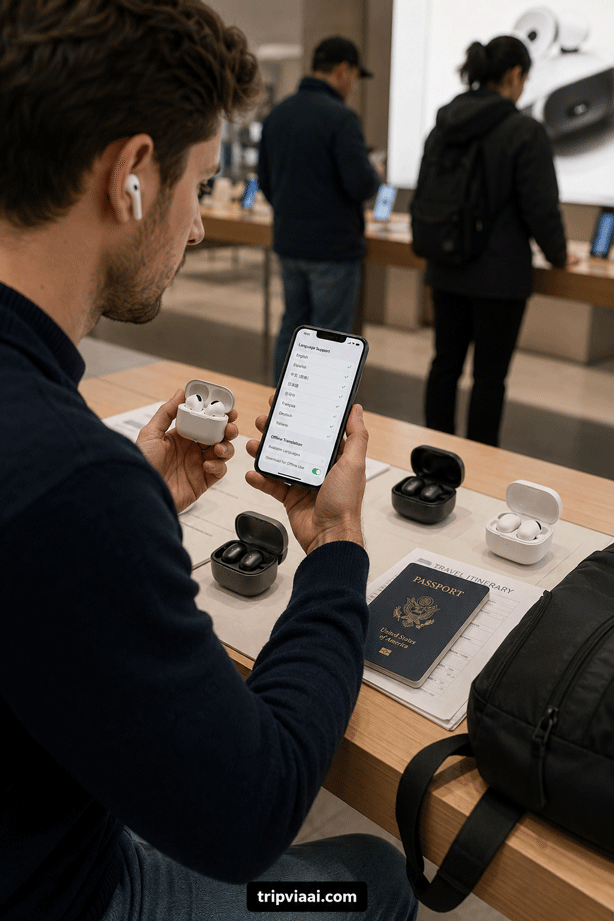
Choosing AI Translation Earbuds Before an International Trip
| Feature | AI Translation Earbuds | Phone Translation App |
|---|---|---|
| Spoken conversations | Very convenient | Works well |
| Hands-free use | Yes | No |
| Menus and signs | Limited | Excellent |
| Written translation | Limited | Excellent |
| Background noise | Can affect accuracy | Can also affect speech input |
| Offline use | Depends on the device | Depends on the app/language |
| Cost | Additional purchase | Often available on your phone |
| Best for | Frequent conversations | Occasional or mixed translation needs |
FAQs
Do AI translation earbuds really work?
Yes, they can help with everyday conversations between people who speak different languages. However, accuracy can vary depending on language support, internet connection, background noise, accents, and speaking speed. They should be treated as a travel aid rather than a perfect interpreter.
Can translation earbuds work without the internet?
Some devices and language modes offer offline translation, while others rely heavily on an internet connection. Always check the specific model’s offline language support before travelling.
Are AI translation earbuds better than a phone translation app?
Not necessarily. Earbuds are more convenient for frequent spoken conversations because they can provide a hands-free experience. A phone is often better for translating menus, signs, documents, and written messages.
Are translation earbuds useful for international travel?
They can be useful when you frequently need to communicate with people who don’t speak your language. Hotels, restaurants, taxis, public transportation, and local shops are examples where they may provide practical help.
5. Should every traveller buy AI translation earbuds?
No. They are most useful for travellers who expect frequent language barriers. If you only need occasional translation or mostly need to translate written information, your smartphone may already be enough.
Conclusion
AI translation earbuds can be a useful travel tool, but they are not a magic solution to every language barrier. They work best when you need frequent, simple spoken conversations and when the device supports the languages, connectivity, and translation modes your trip requires.
The smartest approach is to treat them as one part of your travel communication setup, not your only option. Keep your phone translation app available, save important addresses in the local language, and verify important information through written or official sources.
If you regularly travel internationally and often communicate in unfamiliar languages, the convenience of hands-free translation may make dedicated earbuds worthwhile. For occasional translation needs, however, your smartphone may be all you need.
Ultimately, Do AI translation earbuds really work depends on your destination, language needs, connectivity, and how often you expect to have spoken conversations.
TripViaAI helps you make smarter travel decisions by focusing on practical solutions that can make international travel easier.