
 Posted by
 Japan Is Not Completely Cashless — and That Can Catch Travellers Off Guard
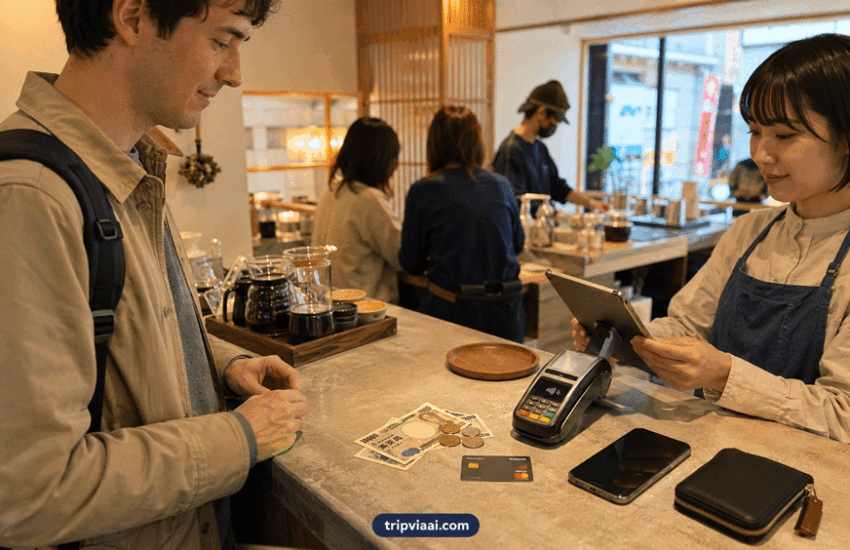
If you are planning your first trip to Japan, one of the easiest mistakes to make is assuming that you can simply arrive with a credit card and pay for everything. In major cities, cards and contactless payments are widely useful, but cash in Japan still has an important place in everyday travel.
The confusing part is that the answer is not simply “carry lots of cash”. Your payment options can change depending on where you are, what you are buying and whether you are travelling through a major city or a smaller town. Japan’s official tourism guidance also recommends keeping some cash available because smaller businesses and some rural areas may not accept cashless payments.
A much better approach is to travel with cash in Japan as a backup while using cards and IC cards whenever they are convenient. That gives you flexibility without making you carry a large amount of yen everywhere.
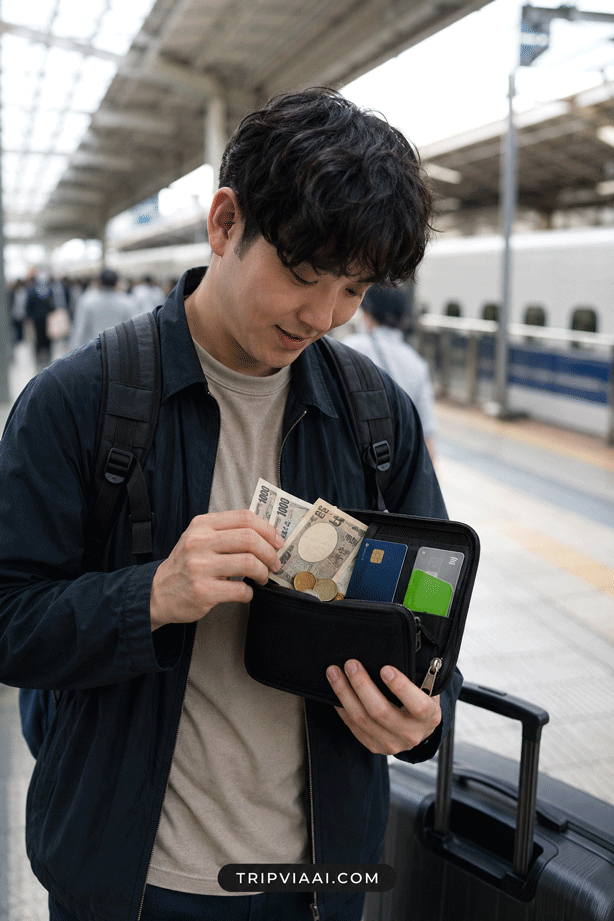
Japan Travel Money Cash, Cards & IC Cards for First-Time Travelers
The Simple Answer: Bring Both Cash and Cards
You do not need to choose between cash in Japan and card payments. For most travellers, carrying a combination is the safer option.
Use your card where card payments are clearly accepted, use an IC card for convenient transport and smaller purchases where supported, and keep enough cash in Japan for places where electronic payment is unavailable or inconvenient.
This three-part approach is especially useful because payment acceptance is not identical everywhere. A hotel in Tokyo may have no problem accepting an international card, while a small restaurant, local shop or rural business may still prefer cash.
So instead of asking, “Can I travel around Japan without cash?”, the more useful question is: “When will I actually need cash?” That is what the rest of this guide will help you figure out.
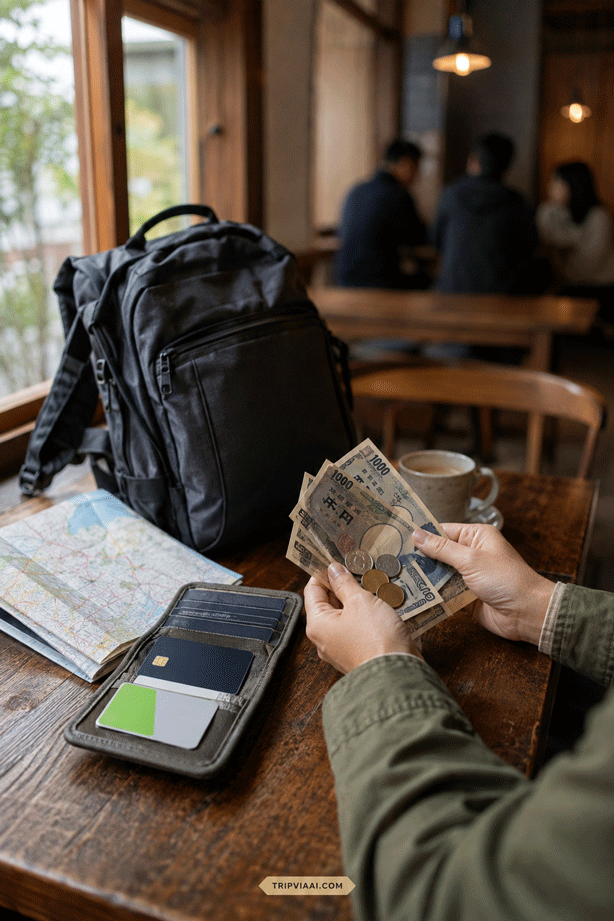
Preparing Japanese Yen and Travel Essentials at a Café
Where You’ll Most Likely Need Cash in Japan
The biggest mistake is thinking that every place in Japan follows the same payment rules. Cash in Japan is still useful precisely because payment options can vary from one business to another.
In large cities such as Tokyo, Osaka and Kyoto, you will generally find plenty of businesses that accept international cards. Hotels, department stores, major shops and many chain restaurants are usually easier for card users. But once you move away from major tourist areas, you may encounter smaller restaurants, independent shops or local businesses where cash is the more practical option.
That does not mean you need to walk around with a thick wallet full of yen. A modest cash reserve is usually much more sensible. The important thing is knowing that cash in Japan is your backup when a card or contactless payment is not available.
A good rule for travellers is simple: if you are going somewhere small, local or outside the main tourist areas, take some yen with you before leaving.
When Cards Are the Better Option
For larger purchases, cash in Japan is not always the most convenient choice. If you are paying for a hotel, shopping at a department store or making a relatively expensive purchase, using an international credit or debit card can be easier than carrying a large amount of yen.
Cards also give you a useful record of your spending, which can make it easier to keep track of your travel budget. However, do not assume that every card will work everywhere. Acceptance can vary between businesses, and your bank may also decline an overseas transaction for security reasons.
Before your trip, check that your card is enabled for international transactions and keep a second payment card somewhere separate from your main wallet. That small precaution can save you a lot of trouble if your primary card is lost, blocked or unexpectedly declined.
For everyday travel, the most practical approach is therefore not cash in Japan versus cards. It is knowing when each one makes more sense.
How Much Cash Should You Carry in Japan?
There is no universal amount of cash in Japan that every traveller should carry. Your needs depend on your itinerary, how often you use cards and whether you are staying mainly in major cities or visiting smaller towns.
Instead of carrying your entire travel budget in yen, think of cash in Japan as a daily spending reserve plus an emergency backup. Keep enough for small purchases and unexpected situations, then replenish it when convenient rather than withdrawing a large amount at once.
For a day spent mainly in Tokyo, Osaka or another major tourist city, you may be comfortable carrying a smaller amount because cards and electronic payments are widely available. If you are heading into a rural area or spending the day somewhere with fewer businesses, take enough additional yen to avoid depending on a nearby ATM.
The safest approach is simple: carry enough cash to stay comfortable, but not so much that losing your wallet becomes a major financial problem.
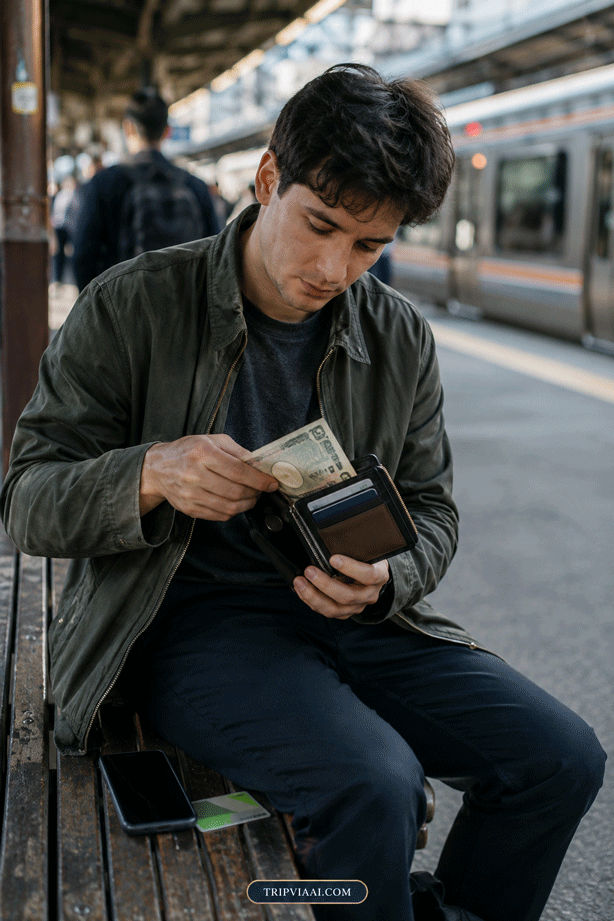
Managing Japanese Yen While Traveling by Train in Japan
Where to Get Japanese Yen Safely
If you run short of cash in Japan, there is usually no need to panic or exchange a large amount of foreign currency before your trip. Japan has several practical ways for international travellers to obtain yen after arrival.
ATMs are available at major airports, and Japan Post Bank has ATMs across the country, including some locations at stations and supermarkets. Seven Bank ATMs are particularly convenient because many are located inside 7-Eleven convenience stores, and its overseas-card service provides multilingual guidance.
You can also exchange foreign currency at airport exchange counters, banks and some other exchange services. However, don’t wait until you have almost no cash in Japan left. ATM opening hours can vary, fees may apply, and JNTO notes that some ATMs can occasionally run out of cash.
A sensible approach is to keep a small reserve of yen and top it up when convenient rather than making one huge withdrawal at the beginning of your trip. This keeps your wallet lighter and gives you another layer of security if your plans change.
Watch Out for ATM Fees and Currency Conversion
Getting cash in Japan is usually straightforward, but the amount you actually receive for your money can depend on the fees and conversion choices involved. Your own bank may charge an international withdrawal fee, while the Japanese ATM may apply its own fee depending on the card and transaction.
There is another detail that travellers sometimes overlook: the currency conversion option shown by an ATM or card terminal. If you are offered a choice between paying or withdrawing in Japanese yen and having the machine convert the amount into your home currency, check the exchange rate and fees carefully rather than automatically accepting the conversion.
For most travellers, keeping the transaction in Japanese yen and allowing their card provider to handle the currency conversion can be worth considering, but the exact cost depends on your bank and card. Check your card’s foreign-exchange and ATM fee policy before travelling.
You do not need to obsess over every small fee, but understanding them helps you avoid paying more than necessary while getting cash in Japan.
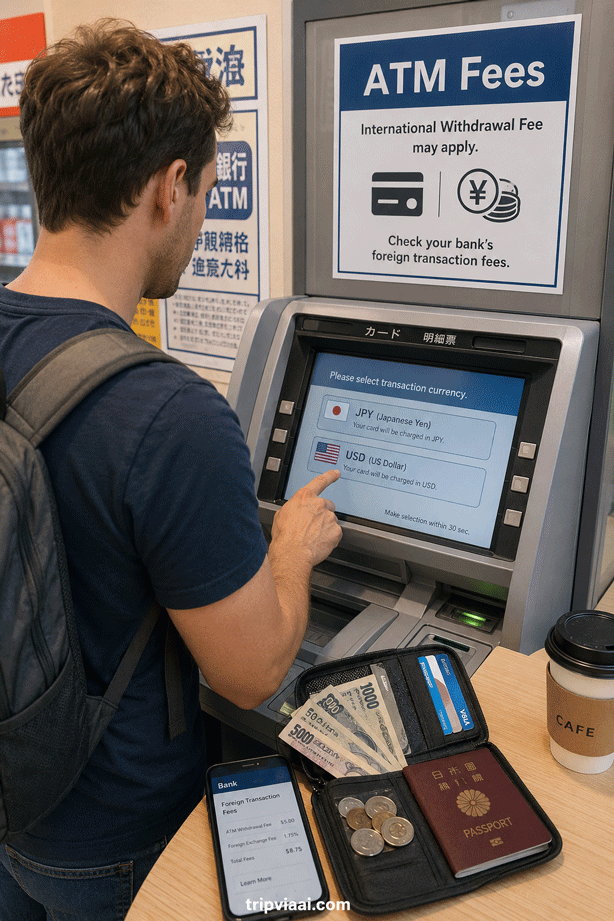
Japan ATM Fees & Currency Conversion Tips
What to Do If Your Card Gets Declined
One reason I would never recommend travelling with cash in Japan as your only payment method is that carrying cash alone creates its own problem. If your wallet is lost or stolen, you could suddenly lose access to a large part of your travel money.
The safer setup is to have two cards and some cash in Japan, with the cards stored separately. Keep your primary card in your everyday wallet, while the backup card stays somewhere secure in your luggage. If one card is declined, you can try the other rather than immediately assuming that the shop does not accept international cards.
It is also worth checking your bank’s overseas transaction settings before leaving home. JNTO notes that international cards are generally accepted, but individual businesses can differ, and travellers should check whether a particular establishment accepts their card.
If both cards fail, your cash in Japan becomes the immediate backup. And if you are running low, Japan Post Bank and Seven Bank ATMs are among the options available to international-card users.
Your IC Card Is Useful, But It Does Not Replace Cash Everywhere
If you are using public transport in Japan, an IC card can make everyday travel much easier. Cards such as Suica and PASMO can be used for trains and buses and, at participating businesses, for smaller purchases such as drinks or convenience-store items. That can reduce how often you need to take out cash in Japan during the day.
However, an IC card should not be treated as a complete replacement for cash in Japan. Its acceptance depends on the service and business, and you may still encounter situations where another payment method is required. More importantly, some physical IC card top-up machines require cash, so you could need yen even when you are relying heavily on your IC card.
This is why I would treat an IC card as a convenience tool, rather than your entire payment plan. Keep your card topped up, but keep some cash in Japan available as a backup. That combination is much less stressful when you are moving between stations, restaurants and smaller local businesses.
Do You Need More Cash Outside Tokyo, Kyoto and Osaka?
Yes, this is where your payment strategy needs a little more thought. In the major tourist cities, you can often rely heavily on cards and electronic payments, but cash in Japan becomes more important when your itinerary includes smaller towns, rural areas or independent local businesses.
That does not mean every rural shop is cash-only. Payment options are changing, and you may find card or mobile payments in places where you did not expect them. The problem is simply that you cannot rely on the same level of payment acceptance everywhere.
If you are taking a day trip to a less touristy area, visiting a small local restaurant or exploring a remote attraction, carry some extra cash in Japan before leaving the city. Finding an ATM should not be your first task after arriving somewhere unfamiliar.
A useful habit is to think about your destination before you leave your hotel. If you are spending the day around central Tokyo, your card and IC card may handle much of your spending. If you are heading somewhere quieter, make sure you already have enough cash in Japan to cover food, transport and unexpected small expenses.
This simple habit can prevent an otherwise enjoyable day from turning into a search for an ATM.
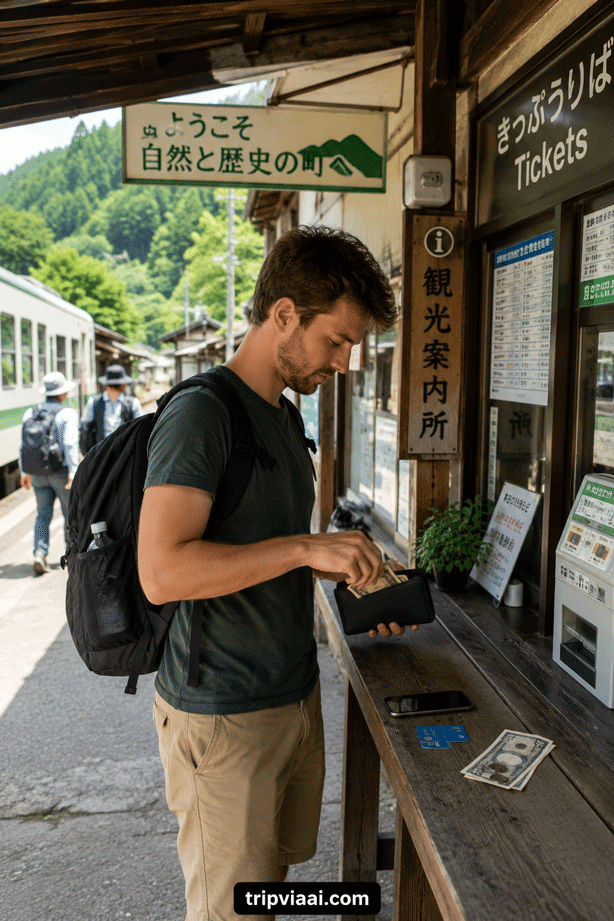
Cash in Japan: Why You Need Extra Yen Outside Major Cities
Keep a Small Emergency Reserve Separate From Your Everyday Money
One of the easiest ways to make cash in Japan more useful is to stop treating all your yen as spending money. Keep a small portion separately from the cash you use during the day. If you lose your wallet, drop some notes while paying or accidentally leave your purse somewhere, you still have a backup.
For example, you could keep your everyday spending money in your wallet and a smaller emergency reserve in a secure part of your luggage. Your backup card can be stored separately as well. This means losing one payment method does not leave you completely stuck.
You also do not need to carry your entire holiday budget as cash in Japan. Large amounts are unnecessary for most travellers and can make a loss more painful. A better system is to carry what you reasonably expect to use and replenish your reserve when convenient.
This becomes particularly useful on longer trips. Instead of constantly worrying about whether you have enough cash in Japan, you know that you have a separate backup available if something unexpected happens.
A Simple Payment Setup Makes Japan Much Easier
The easiest way to manage cash in Japan is to stop thinking of one payment method as the “right” one. Give each method a job.
Use your main card for hotels, larger purchases and places where card payments are clearly available. Use an IC card when it makes transport and small everyday payments quicker. Keep cash in Japan for smaller businesses, unexpected expenses and places where electronic payment is unavailable.
Before leaving your hotel each morning, take a moment to check your plans. If you are spending the day in a major city, you may not need much cash. If you are travelling to a smaller town or rural attraction, carry a little more yen before you leave.
I would also keep one backup card somewhere separate from your everyday wallet. That way, your payment system does not depend on a single card, phone or wallet.
The goal is not to carry every possible payment method. It is to have enough flexibility that one failed payment does not interrupt your day.
A practical example
Imagine you are spending a day in Kyoto. Your train and bus journeys may be easier with an IC card, your hotel can usually be paid by card, and a larger restaurant may accept your international card. But if you stop at a small local shop or need to pay a minor entrance fee, having cash in Japan immediately available can save you from searching for an ATM.
That is the real advantage of carrying a combination rather than relying completely on one method.
Common Payment Mistakes Travellers Make in Japan
The biggest mistake is assuming that cash in Japan works exactly the same way everywhere. Some travellers arrive with only a card because they expect Japan to be completely cashless, while others exchange a large amount of yen before their trip and carry it everywhere. Neither approach is ideal.
Another common mistake is keeping all your money and cards in one wallet. If that wallet disappears, you could lose both your everyday cash in Japan and your main payment method at the same time. Keeping a backup card and a small emergency cash reserve separately gives you much more flexibility.
It is also easy to forget about your bank’s overseas transaction settings. A perfectly valid card can still be declined because of a security restriction, an unusual transaction pattern or another issue with the issuing bank. Check this before travelling rather than discovering the problem at a restaurant.
Finally, do not wait until you have almost no cash in Japan left before thinking about your next ATM. If you know you are leaving a major city the following morning, get the cash you reasonably need beforehand. A few minutes of preparation can prevent a surprisingly stressful search for an ATM later.
What to Check Before You Leave for Japan
A little preparation at home can make cash in Japan much easier to manage once you arrive. Before your flight, make sure your main debit or credit card is enabled for international use and that you know how to contact your bank if a transaction is unexpectedly declined.
It is also worth carrying a second card separately from your main wallet. Keep your everyday cash in Japan in your wallet, but store a small emergency reserve somewhere secure. This way, losing one wallet does not mean losing every way of paying.
If you plan to use an IC card for transport, set that up before or soon after arrival and understand how you will top it up. Most importantly, do not assume that one payment method will work for every situation.
Your ideal setup before leaving is simple: one main card, one backup card, some Japanese yen and a convenient transport payment option. With those four pieces in place, you can spend your trip thinking about where you are going rather than worrying about how you will pay.
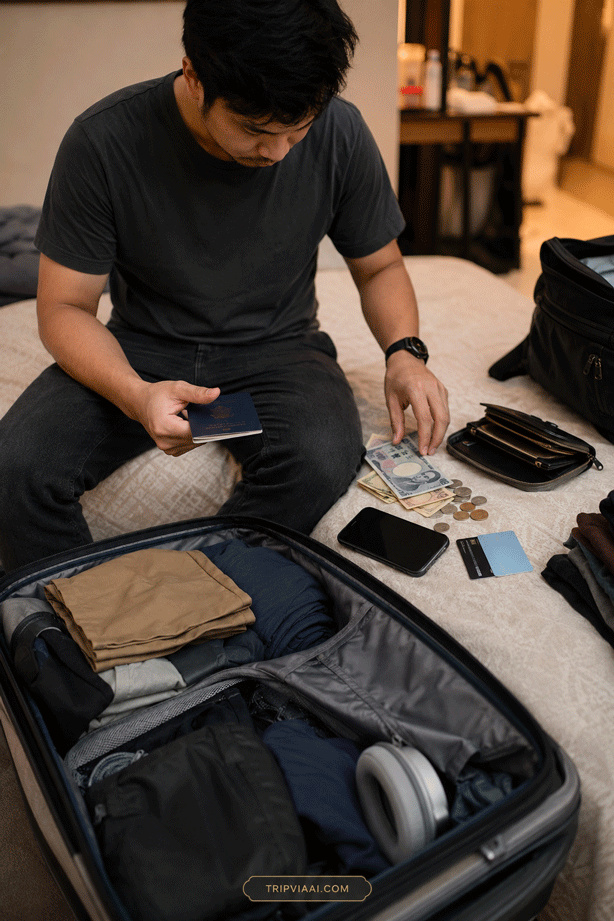
Japan Trip Packing Essentials What to Prepare the Night Before
What Should You Actually Carry for a Day in Japan?
For most travellers, the smartest approach is to keep your everyday cash in Japan setup simple. You do not need a wallet packed with every card you own or a large amount of yen. Take your main payment card, a transport IC card if you use one, and enough cash in Japan for the type of places you expect to visit that day.
If you are staying around central Tokyo or Osaka and visiting major attractions, shops and restaurants, you may find that your card handles much of your spending. If your plans include a small neighbourhood restaurant, local market or a day trip outside the city, carry a little more yen before you leave.
Keep your backup card and emergency cash in Japan somewhere separate rather than carrying everything together. That way, your daily wallet can stay light while your backup remains available if something goes wrong.
The best payment strategy for Japan is therefore not about choosing cash or cards. It is about matching the payment method to the situation and keeping a backup available when the unexpected happens.
A Practical Payment Setup for Your First Trip to Japan
For a first trip to Japan, the easiest approach is to give each payment method a different job. Keep your main debit or credit card for hotels, larger purchases and businesses that clearly accept card payments. Use an IC card when it makes transport and small everyday purchases easier, and keep some Japanese yen available for smaller businesses or situations where electronic payment is unavailable.
It is also sensible to keep a backup card separately from your everyday wallet. Your cash in Japan should be treated in the same way: carry enough for the day and keep a small emergency reserve somewhere secure rather than carrying your entire travel budget.
Before leaving your accommodation each morning, consider where you are going. A day around central Tokyo may require relatively little cash in Japan, while a visit to a smaller town, local market or rural attraction may justify carrying more yen.
The goal is not to choose between cash and cards. It is to have enough flexibility that one payment method failing does not interrupt your plans.
So, Do You Really Need Cash in Japan?
Yes, but probably not as much as you might expect.
Modern Japan offers plenty of card and electronic payment options, particularly in major cities and larger businesses. However, cash in Japan remains useful for smaller businesses, certain local situations and places where electronic payment is not available.
For most travellers, the most flexible setup is straightforward: carry some Japanese yen, have a main international card, keep a backup card separately and use an IC card when it is convenient for transport and participating businesses.
The important thing is not how much cash in Japan you carry. It is whether you have a backup when your preferred payment method does not work.
Before leaving home, check your cards, understand your bank’s overseas fees, prepare some yen and think about where you will be travelling. That small amount of preparation can make paying for everyday experiences in Japan considerably easier.
In short: don’t travel to Japan completely cashless, but don’t carry your entire trip budget in cash either.
Planning your next trip? Explore more practical travel tips and destination guides on TripViaAI.