
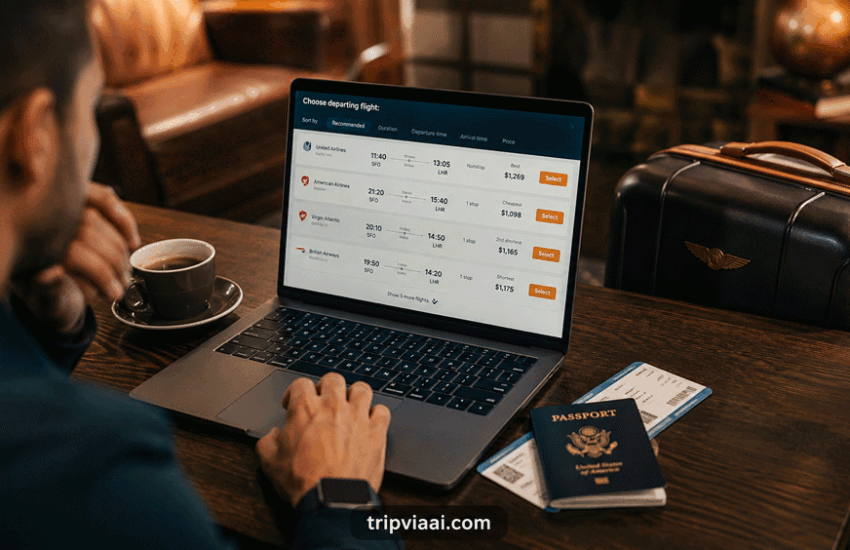
 Posted by
 Introduction
Flights can be one of the biggest expenses of a vacation, especially when you are traveling internationally or during a busy holiday period. However, paying more for airfare is not always unavoidable. Small decisions about travel dates, airports, baggage, booking timing, and ticket conditions can make a noticeable difference to the total cost of a trip.
The good news is that finding a better airfare does not require luck or spending the entire day searching for flights. The most useful flight booking tips that save money and time are based on understanding how fares work, comparing the right options, and avoiding common mistakes before you make a payment.
Instead of focusing only on the cheapest number shown in a search result, travelers should look at the complete value of a flight. A slightly more expensive ticket can sometimes be the better option when it includes baggage, uses a convenient airport, offers a better schedule, or avoids an expensive and exhausting layover.
This guide covers practical strategies that can help you compare flights more effectively, avoid unnecessary booking costs, and make smarter decisions before your next trip.
Why Smart Flight Booking Matters
Flights often represent a significant portion of a travel budget, which makes the booking decision important even before hotel and activity costs are considered. A small difference in airfare can become meaningful when you are booking tickets for several people or planning multiple trips throughout the year.
Many travelers focus entirely on finding the lowest advertised fare. However, the cheapest number displayed during a search may not remain the cheapest option after baggage, seat selection, airport transportation, cancellation conditions, and other charges are considered.
The best flight booking tips that save money and time are therefore not simply about finding a low ticket price. They are about understanding what you are actually paying for and comparing the complete journey before making a decision.
A few extra minutes of research can also prevent expensive mistakes. Checking your dates, passenger information, baggage allowance, airport location, connection time, and cancellation policy before payment can save much more money than rushing to book the first attractive fare.
Common Flight Booking Mistakes vs. Smart Booking Habits
| Common Flight Booking Mistake | Smarter Booking Habit |
|---|---|
| Waiting until the last minute | Start tracking prices earlier |
| Checking only one website | Compare multiple platforms |
| Looking only at the advertised fare | Check the complete final price |
| Ignoring baggage fees | Review baggage allowances |
| Choosing flights emotionally | Compare overall value |
| Searching only the nearest airport | Check nearby airports |
| Ignoring flexible dates | Compare alternative travel dates |
| Choosing very short connections | Check realistic connection times |
| Ignoring cancellation conditions | Read the fare rules |
| Focusing only on airfare | Calculate the total trip cost |
Quick Takeaway
The biggest savings usually do not come from one secret booking trick. They come from several small decisions made before purchasing a ticket. The most useful flight booking tips that save money and time involve tracking prices, comparing multiple options, checking additional fees, staying flexible when possible, and understanding the total cost of the journey.
You do not necessarily need to find the absolute cheapest ticket. A better goal is to find a flight that offers a reasonable balance between price, schedule, convenience, baggage allowance, travel time, and flexibility.
1. Start Tracking Flight Prices Earlier Than Most Travelers
One of the easiest flight booking tips that save money and time is to start monitoring prices before you are ready to purchase. Many travelers wait until their travel dates are fixed and then immediately search for a flight, leaving themselves with very little information about whether the fare is reasonable.
Airline prices can change according to demand, seasonality, remaining seats, holidays, and other pricing factors. Watching a route for some time gives you a better understanding of its normal price range and makes unusual increases or decreases easier to recognize.
Price tracking is especially useful when you have some flexibility with your travel dates. Instead of making a decision based on one search, you can observe the route and compare different dates before committing to a ticket.
Using Flight Price Alerts
Price alerts can make this process much easier because you do not have to manually search for the same flight every day. Set alerts for important routes and review the changes when notifications arrive.
The purpose is not to predict the exact lowest possible fare. It is to understand the market well enough to recognize when a price fits your budget and travel plans.

Using Flight Price Alerts
2. Understand the Best Time to Book Flights
Many travelers believe there is one particular day or time when every flight becomes cheaper. In reality, airline pricing is more complicated and can change depending on demand, seasonality, route popularity, remaining seats, holidays, and major events.
The best flight booking tips that save money and time focus on monitoring prices rather than relying on a single booking myth. Booking extremely early may not always provide the best option, while waiting until the last moment can leave you with fewer choices and higher fares.
A practical approach is to monitor the route for a reasonable period and understand what fares normally look like. When the price fits your budget and the schedule works well, you can make the booking instead of endlessly waiting for a perfect deal.
The goal is not necessarily to find the lowest fare that ever existed. The goal is to secure a reasonable price without creating unnecessary stress or losing your preferred flight.
3. Compare Multiple Booking Platforms Before Paying
One of the most valuable flight booking tips that save money and time is comparing several booking options before completing the purchase. The same route can sometimes appear at different prices depending on where you search, and different platforms may show different fare conditions.
Many travelers book the first acceptable flight they find because they assume prices are identical everywhere. Taking a few extra minutes to compare can reveal different baggage policies, cancellation conditions, departure times, or total prices that may make another option more suitable.
When comparing flights, do not look only at the initial fare. Check the complete cost and important conditions before deciding.
A useful comparison should include:
- Total ticket price
- Baggage allowance and fees
- Seat selection charges
- Cancellation and change conditions
- Payment or service fees
Comparing these details can help you avoid choosing a ticket that looks cheap initially but becomes more expensive at checkout.
4. Avoid Common Flight Booking Mistakes
Many travelers lose money not because airfare is inherently expensive, but because of simple mistakes during the booking process. Incorrect travel dates, wrong passenger details, overlooked baggage restrictions, and misunderstood cancellation rules can turn an attractive fare into an expensive problem.
Before making payment, carefully review the complete itinerary. Check the departure and return dates, passenger names, airport codes, flight times, connection details, and baggage allowance so that a simple mistake does not create unnecessary costs later.
One of the most practical flight booking tips that save money and time is simply slowing down before clicking the final payment button. A few minutes of careful checking can prevent a problem that may be difficult or expensive to correct afterward.
Common mistakes worth checking include:
- Selecting incorrect travel dates
- Entering passenger information incorrectly
- Ignoring baggage restrictions
- Skipping cancellation policy details
- Booking without comparing alternatives
5. Be Flexible With Travel Dates Whenever Possible
Flexibility is one of the simplest ways to potentially reduce airfare. Even changing your departure or return date by a day or two can produce different prices depending on demand for that particular route and travel period.
Travelers who have flexible schedules should compare nearby dates instead of automatically choosing the first combination that appears convenient. Weekends, holidays, festivals, school vacations, and major events can all affect demand.
The flight booking tips that save money and time become particularly useful when travelers are willing to make small adjustments without changing the overall trip. A different departure day may provide a better fare while still allowing you to enjoy the same destination and activities.
Flexibility does not mean changing your entire vacation. Sometimes a simple one-day adjustment is enough to create additional flight choices and potentially reduce the total airfare.
6. Learn How Airline Pricing Actually Works
Airline ticket prices can appear random, but airlines use pricing systems that respond to factors such as demand, seasonality, remaining seats, route popularity, and booking patterns. Prices can therefore change even when the flight itself has not changed.
A good flight booking guide focuses on understanding these patterns rather than trying to predict the exact moment when a fare will increase or decrease. Flights around holidays, festivals, school vacations, and major events often experience stronger demand.
Remaining seat availability can also influence which fare categories are available. When cheaper fare categories sell out, travelers may see higher prices even though the flight is still operating normally.
These flight booking tips that save money and time work best when travelers understand that airfare is influenced by demand and availability rather than assuming that every price movement is completely random.
Understanding Airline Pricing Trends
You do not need to become an expert in airline pricing. The important thing is to recognize that fares can change and that waiting does not automatically guarantee a lower price.at save money and time work best when travelers understand that airline pricing is driven by demand, not luck.
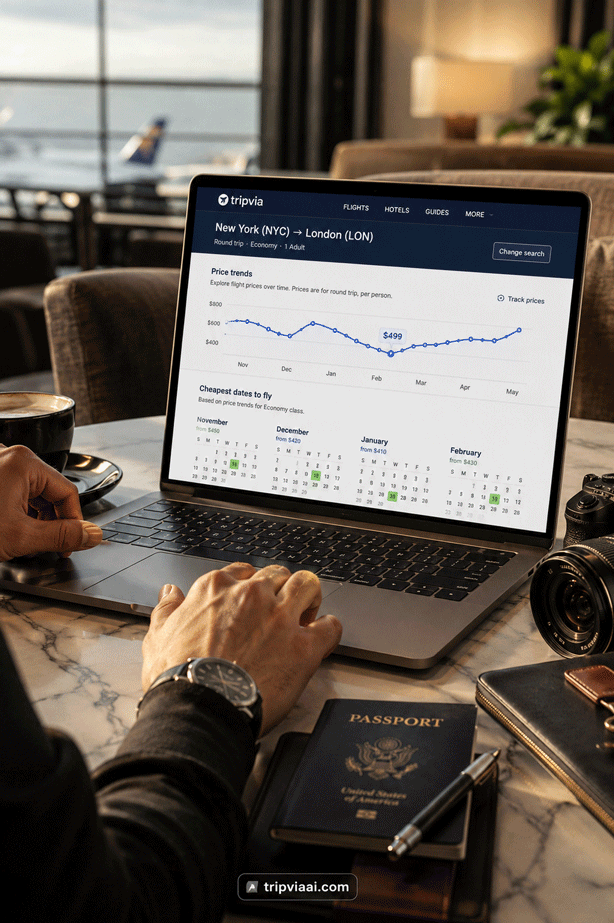
Understanding Airline Pricing Trends
7. Watch Out for Hidden Airline Fees
A cheap advertised fare does not always remain cheap after additional charges are included. Airlines may charge separately for checked baggage, seat selection, priority services, and other options depending on the fare type.
One of the most useful flight booking tips that save money and time is checking the final price before payment instead of comparing only the initial fare displayed in search results.
Baggage is particularly important because travelers who need checked luggage should include that expense when comparing airlines. A slightly higher ticket with baggage included may sometimes cost less overall than a lower base fare that adds several charges later.
Also check seat selection, cancellation, and change fees when they matter to your trip. The right comparison is the final amount you are likely to spend, not simply the number that first catches your attention.
8. Use Budget Airlines Carefully
Budget airlines can provide attractive fares, but their pricing structure often requires more attention than travelers expect. The advertised fare may cover the basic transportation while additional services are charged separately.
Before booking a budget airline, check exactly what is included in the fare. Baggage dimensions, carry-on restrictions, seat selection, boarding requirements, airport locations, and change policies can all affect the final value of the ticket.
A practical flight booking guide does not suggest avoiding budget airlines. Instead, it recommends understanding the complete cost before deciding whether the fare actually provides a saving.
The flight booking tips that save money and time are most useful when travelers compare what they receive for the total price rather than assuming every low-cost fare will automatically be the cheapest option.
9. Choose Airports Strategically
Many travelers search only from the closest airport and never consider nearby alternatives. In larger cities and metropolitan regions, several airports may serve the same destination, and their fares and schedules can be very different.
Comparing nearby airports can reveal lower fares, better flight schedules, or more convenient connections. However, the airport itself should not be evaluated separately from the transportation required to reach it.
These flight booking tips that save money and time work best when airport transfer costs are included in the comparison. A cheaper ticket from an airport several hours away may not actually save money if reaching that airport requires an expensive taxi, train, or long-distance transfer.
Before choosing an alternative airport, compare the complete journey and consider both price and convenience.
Compare Nearby Airports Before Booking
When comparing airports, consider:
- Ticket price
- Transportation cost
- Travel time
- Parking expenses
- Flight schedule
- Baggage conditions
A small difference in airfare may not be meaningful if the additional transportation cost removes most of the saving.
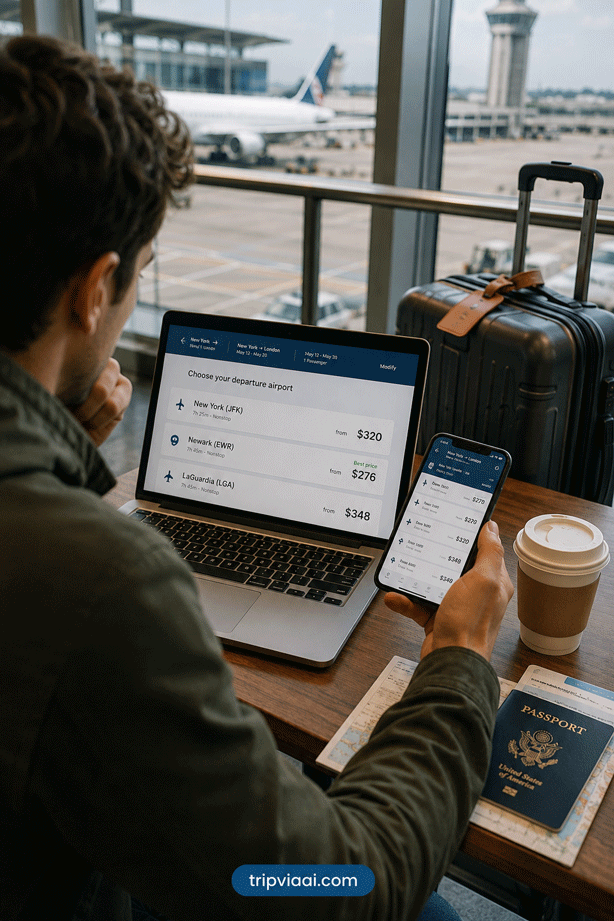
Compare Nearby Airports Before Booking
10. Focus on Total Trip Cost Instead of Ticket Price
One of the smartest booking habits is looking at the complete cost of the journey rather than focusing only on the airfare. A cheaper ticket is not necessarily the cheapest travel option once other expenses are included.
For example, a low-cost flight may depart from a distant airport, include a long overnight layover, or charge separately for baggage. These additional costs can make the final trip more expensive than a slightly higher-priced flight with better conditions.
The flight booking tips that save money and time become much more valuable when travelers compare the full cost of each option. Look at airfare, airport transfers, baggage, layover expenses, travel time, and other unavoidable costs before making the final decision.
A more expensive ticket can sometimes provide better overall value when it saves transportation costs, reduces travel time, or avoids additional charges.
11. Take Advantage of Airline Apps and Price Alerts
Many travelers still search for flights manually even though airline apps and travel platforms can track prices and provide automatic notifications. Using these tools can reduce the amount of time required to monitor a route.
Price alerts are particularly useful when your travel dates are known but you are waiting for a suitable fare. Instead of repeatedly searching the same route, you can receive updates when prices change and then decide whether the new fare fits your budget.
Airline apps can also provide useful information after booking, including schedule updates, gate changes, boarding notifications, and other travel information. Keeping these details organized can make the entire booking and travel process easier to manage.
For frequent travelers, using a small number of reliable tools can be much more efficient than repeatedly checking multiple websites without a clear system.
12. Prepare Better for Long Layovers
Layovers are an important part of flight planning because they can significantly change the overall travel experience. A connection that is too short may leave little room for delays, while an extremely long connection can increase fatigue, food expenses, and waiting time.
Before purchasing a ticket, check the complete connection details rather than looking only at the airfare. Consider the layover duration, airport layout, terminal changes, baggage requirements, and whether you need to pass through additional procedures during the connection.
Long layovers are not necessarily a bad choice. They can provide time to rest, eat, organize your plans, work, or enjoy airport facilities without rushing between flights.
The flight booking tips that save money and time are most useful when travelers choose a connection that matches their comfort level and overall travel schedule.
13. Use Technology to Find Better Flight Deals
Technology has made it much easier to compare routes, dates, airports, and airlines. Travelers can now explore different possibilities in minutes instead of manually checking every airline separately.
One of the smartest flight booking tips that save money and time is using technology as a comparison tool rather than depending on one website. Check flexible dates, nearby airports, different flight combinations, and multiple booking options when your schedule allows it.
Technology cannot guarantee that you will always find the lowest possible fare. However, it can make the research process faster and help you discover options that may otherwise be overlooked.
The most effective approach is to use technology strategically. Compare enough options to make an informed decision, but avoid spending excessive time searching for a price that may disappear before you can book it.
14. Avoid Last-Minute Booking Stress
Last-minute booking can occasionally work, but it can also reduce your choices and increase stress. Popular flights may have fewer available seats, preferred departure times may disappear, and remaining fares may no longer fit your budget.
A practical flight booking guide recommends creating a simple timeline for important trips. Start monitoring prices early, compare your options, and know what fare range and schedule work for you before the booking becomes urgent.
This is particularly useful for international travel, holiday periods, and trips with fixed dates. When your schedule cannot easily change, waiting until the last possible moment can leave you with very few alternatives.
One of the most practical flight booking tips that save money and time is giving yourself enough time to compare flights without being forced into a rushed decision.
Plan Flights Early and Avoid Last-Minute Stress
Planning early does not mean automatically buying the ticket months in advance. It means giving yourself enough time to understand the available options, observe prices, and make a decision without unnecessary pressure.

Plan Flights Early and Avoid Last-Minute Stress
15. Build Your Own Flight Booking System
The most useful booking strategies become easier when they turn into repeatable habits. Instead of approaching every flight search from the beginning, create a simple process that you can follow whenever you need to book a trip.
Start by tracking prices, comparing multiple platforms, checking nearby airports, reviewing baggage policies, and calculating the complete trip cost. Over time, this process can make flight research faster while reducing the chances of overlooking important details.
The best flight booking tips that save money and time are the ones that fit your own travel habits. Someone who frequently travels internationally may need a more detailed booking system than someone who takes only one or two domestic trips each year.
A simple checklist can make the process much easier:
- Track the route and prices early.
- Compare multiple booking options.
- Check nearby airports.
- Review baggage and additional fees.
- Compare the complete trip cost.
- Check layover duration and airport details.
- Verify passenger information before payment.
Once these steps become part of your normal booking routine, you can make decisions more efficiently without relying on last-minute searches or guesswork.
Simple Flight Booking Checklist
Before completing your flight purchase, take a few minutes to review the important details. This final check can help prevent expensive mistakes and make sure the ticket you are purchasing actually matches your travel plans.
| Check Before Booking | Why It Matters |
|---|---|
| Travel dates | Prevents incorrect-date bookings |
| Passenger names | Helps avoid correction problems |
| Departure airport | Confirms the correct airport |
| Arrival airport | Helps evaluate transportation |
| Baggage allowance | Prevents unexpected luggage fees |
| Seat charges | Helps calculate the real price |
| Cancellation policy | Shows your flexibility |
| Change fees | Helps with future adjustments |
| Layover duration | Helps avoid uncomfortable connections |
| Final payment amount | Confirms the actual cost |
The final payment screen is especially important because it shows what you are actually going to pay. Compare that amount with other options before completing the purchase, particularly when baggage, seat selection, or other additional services are involved.
Conclusion
Finding affordable airfare is not simply about luck or discovering one secret trick. The most effective flight booking tips that save money and time are based on preparation, comparison, flexibility, and understanding the complete cost of your journey. Small improvements in the booking process can help prevent unnecessary expenses and reduce stress before your vacation even begins.
Start tracking prices early, compare multiple platforms, check baggage and additional fees, consider nearby airports, and look beyond the advertised ticket price. A flight that appears slightly more expensive can sometimes provide better overall value when transportation, baggage, layovers, schedule, and convenience are included in the calculation.
The goal is not necessarily to find the absolute cheapest ticket available. The better approach is to find a flight that fits your budget, schedule, comfort level, and overall travel plans without creating unnecessary problems later.
Spend less time worrying about airfare and more time enjoying the destination.
For more practical travel guides, smart planning tips, and money-saving travel advice, visit TripViaAI — tripviaai.com.