
 Posted by
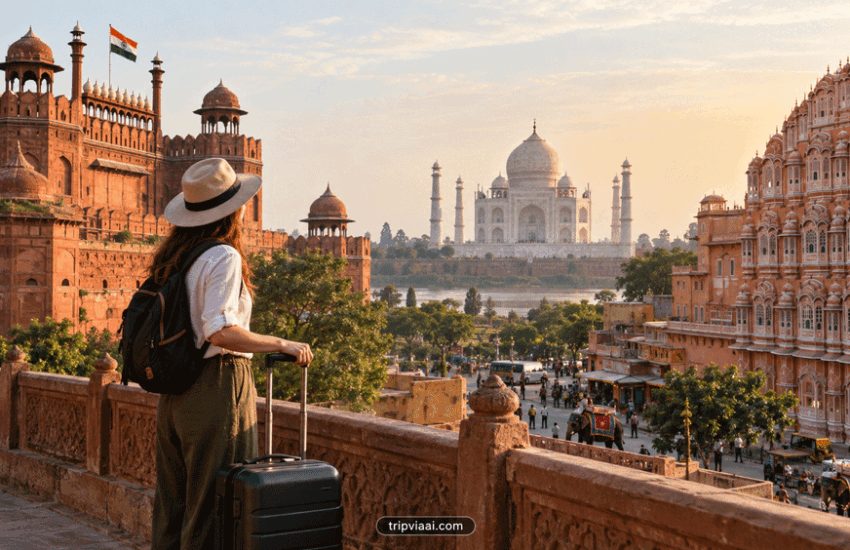
 Planning your first trip to India can be exciting, but choosing where to begin is often harder than expected. Delhi, Agra and Jaipur are among the most popular destinations for first-time visitors, yet each one offers a noticeably different experience. Delhi combines historic landmarks with the energy of a huge modern city, Agra is closely connected with the Taj Mahal and Mughal heritage, while Jaipur introduces travellers to Rajasthan through forts, palaces, markets and distinctive architecture.
If you only have a few days, visiting all three may not automatically be the best decision. Travelling between cities takes time, and an itinerary packed with attractions can leave you seeing more places without actually enjoying them.
The better approach is to choose your destination according to what you want from your first India trip, how many days you have and how quickly you like to travel. A Delhi Agra Jaipur trip can work extremely well when you understand what each city adds to the journey. This guide compares Delhi, Agra and Jaipur so you can make that decision with a practical plan rather than simply following a popular itinerary.
Delhi, Agra or Jaipur: A Quick Comparison
Before choosing, it helps to understand what each destination does best. The three cities are often grouped together because they can form the classic Golden Triangle route, but they should not be treated as interchangeable stops.
| Destination | Best For | Ideal Stay | Overall Experience |
|---|---|---|---|
| Delhi | History, food, museums and city life | 2–3 days | Diverse and energetic |
| Agra | Taj Mahal and Mughal heritage | 1–2 days | Landmark and history focused |
| Jaipur | Forts, palaces and Rajasthan culture | 2–3 days | Architectural and cultural |
| All Three | A broader first India experience | 5–7+ days | Active multi-city trip |
These time suggestions are starting points rather than strict rules. A traveller who enjoys slow mornings and relaxed sightseeing may need longer, while someone interested mainly in major landmarks can manage a shorter schedule.
The important thing is to build your trip around your priorities instead of trying to collect as many destinations as possible. A Delhi Agra Jaipur itinerary works best when you treat the three cities as different experiences rather than three similar sightseeing stops. Delhi gives you variety, Agra focuses more heavily on Mughal heritage, and Jaipur brings a strong Rajasthan identity to the journey.
Delhi: Choose It If You Want Variety
Delhi is a strong choice when you want your first India trip to include several different experiences rather than focusing on one particular attraction. The capital has historic monuments, museums, markets, restaurants and busy neighbourhoods, giving you plenty of ways to spend your time beyond traditional sightseeing.
That variety can be especially useful if you are visiting India for the first time and are not yet sure what type of travel experience you enjoy most. You can explore a major historical site in the morning, take a break for food, visit another part of the city later and finish the day with a local meal or relaxed evening.
Delhi also gives you a useful introduction to the scale and energy of a major Indian city. The experience can feel busy at times, but that is also part of what makes it different from the more focused sightseeing experience you may have in Agra.
Delhi is best suited to travellers who enjoy:
- Historic monuments and architecture
- Museums and cultural attractions
- Indian food and local markets
- Exploring large cities
- Different neighbourhoods and everyday city life
- Having many accommodation and transportation choices
The main drawback is that Delhi can feel overwhelming if you try to cover too much in a short period. Traffic, crowds and the size of the city can turn a simple-looking sightseeing plan into a tiring day.
For that reason, don’t measure a Delhi visit by the number of attractions you manage to tick off. Choosing a few important places and allowing enough time between them will usually create a better experience than rushing from one side of the city to another.
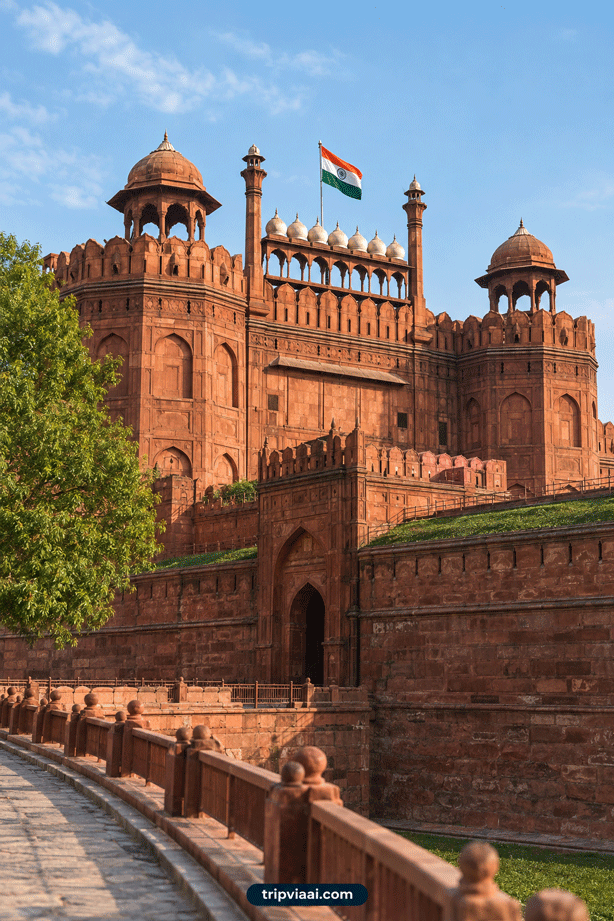
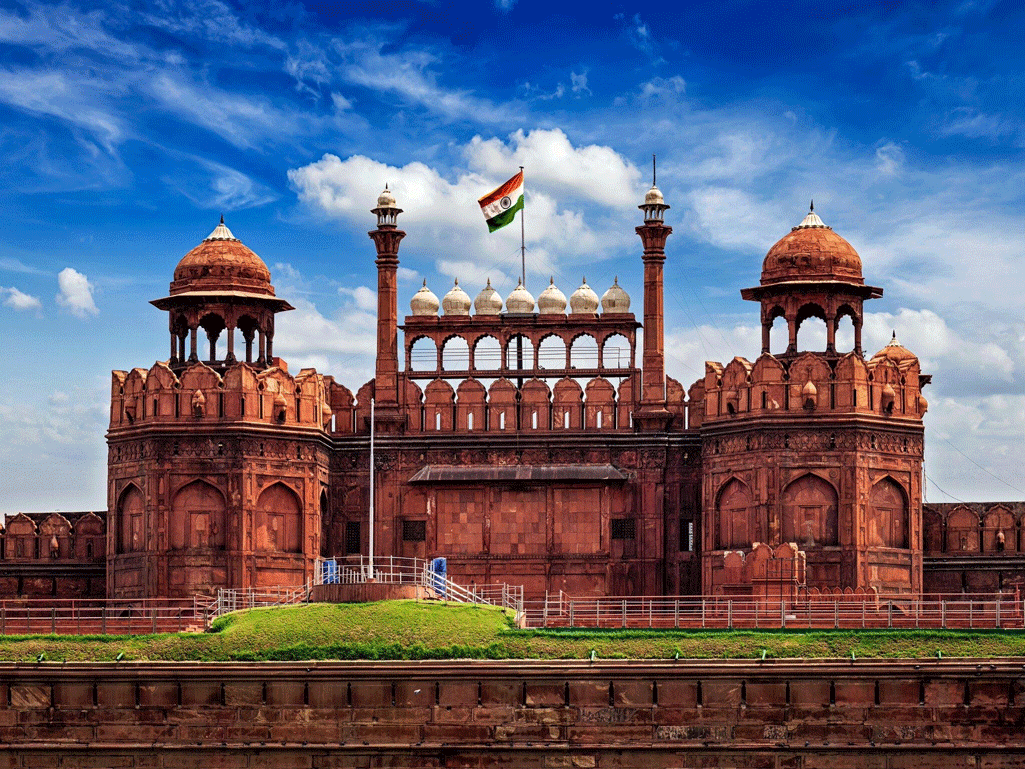
Red Fort, Delhi A Historic Icon of India
What Makes Delhi Different?
The biggest advantage of Delhi is variety.
Agra is more closely associated with Mughal heritage and the Taj Mahal, while Jaipur has a stronger focus on Rajasthan’s forts, palaces and historic architecture. Delhi gives you a broader combination of history, food, culture and modern city life.
That makes it particularly useful for travellers who want to experience more than monuments during their first visit. You can learn about India’s history while also seeing how a modern Indian capital operates around those historic areas.
For example, someone who enjoys food may value an evening exploring Delhi’s culinary scene just as much as another historical attraction. Likewise, a traveller interested in everyday culture may prefer spending time in a neighbourhood rather than adding another monument to an already full schedule.
What Should You See in Delhi?
You don’t need to visit every famous attraction to understand the city. A better approach is to combine a few major historical sites with time for food, markets or neighbourhood exploration.
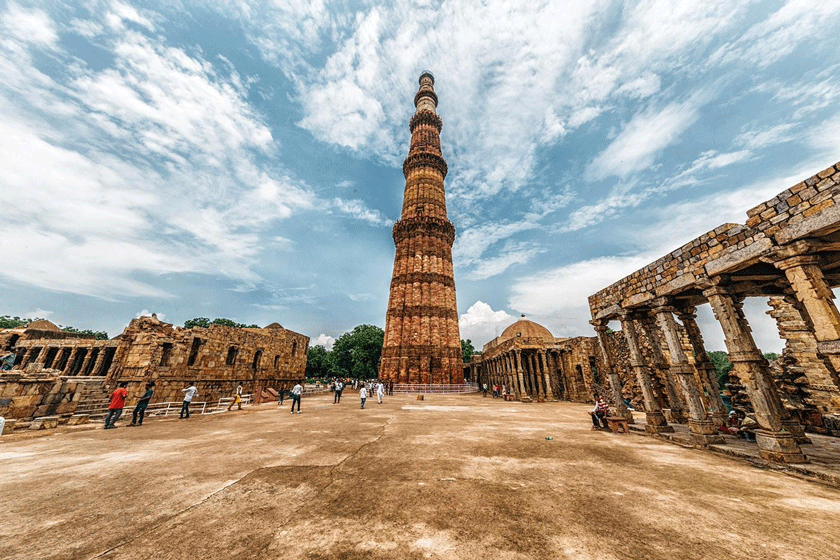
The Red Fort, Humayun’s Tomb and Qutub Minar are among the major historical attractions that can give first-time visitors a strong introduction to Delhi’s architectural heritage. Rather than trying to see all three in a single rushed stretch, consider how they fit with the location and timing of your other plans.
This is where itinerary planning becomes more important than simply collecting attraction names. A well-paced day with fewer stops can leave you with a stronger impression of Delhi than a schedule filled with back-to-back sightseeing.
How Many Days Do You Need in Delhi?
For many first-time visitors, two full days in Delhi provide a useful introduction without making the city the entire vacation. This gives you enough time to explore several major sights while leaving room for meals, breaks and some unplanned exploration.
If you have only three days for your entire India vacation, however, you need to decide whether Delhi itself is your priority. Travellers who mainly want to see the Taj Mahal may prefer to divide their time between Delhi and Agra, while someone more interested in city culture may choose to stay longer in Delhi.
With five to seven days available, Delhi becomes much easier to combine with Agra and Jaipur because you have more flexibility around transportation and sightseeing.
Agra or Jaipur? What Kind of Experience Do You Want?
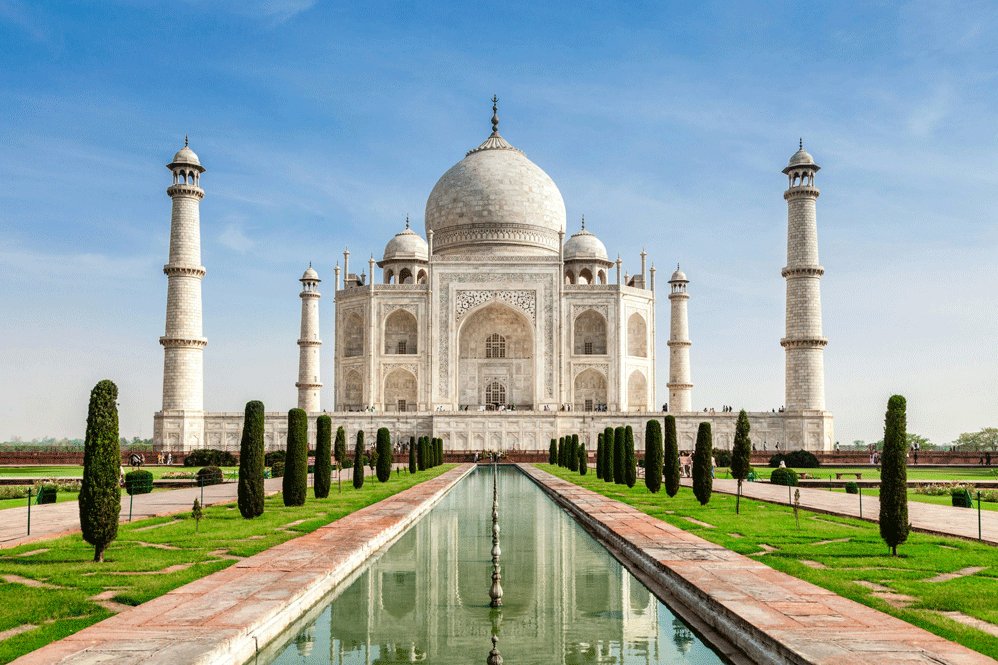
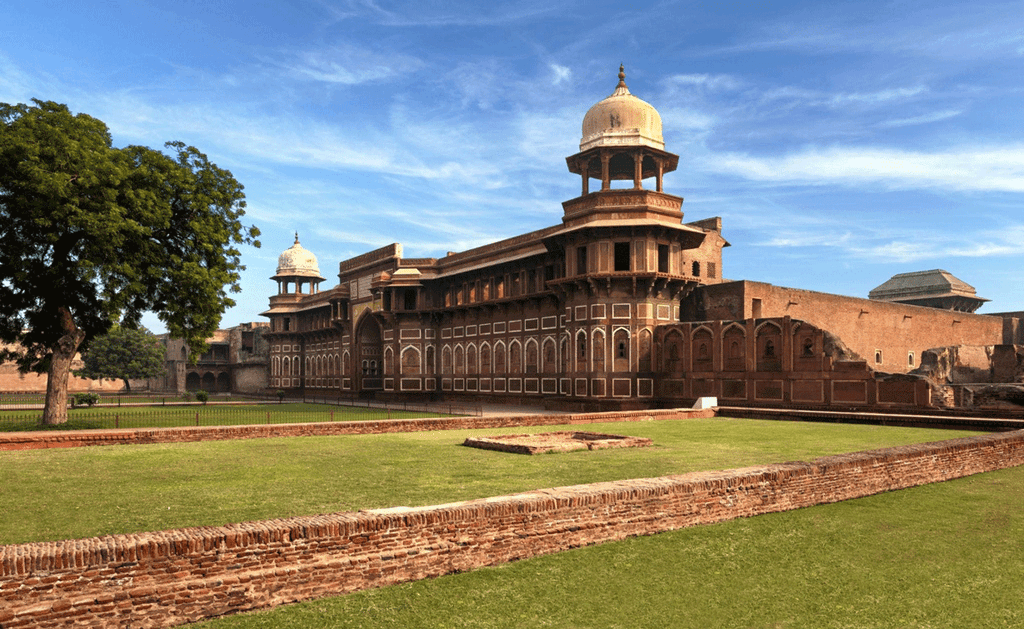
If Delhi gives you variety, Agra and Jaipur are much more focused experiences. Agra is strongly connected with the Taj Mahal and Mughal history, while Jaipur stands out for its forts, palaces and Rajasthan heritage. For travellers planning a Delhi Agra Jaipur trip, Agra can be the shortest stop while still adding one of the most important experiences to the route. That makes it particularly useful when you want to see the Taj Mahal without giving up too much time in Delhi or Jaipur.
That difference is important when planning a short first trip to India. Instead of asking which city is more famous, ask which experience you would be most disappointed to miss.
Agra: Choose It If the Taj Mahal Is a Major Reason for Your Trip
For many international travellers, Agra immediately brings one place to mind: the Taj Mahal. If seeing this famous monument is one of the main reasons you want to visit India, Agra deserves serious consideration even when your vacation is relatively short.
The Taj Mahal is not the only reason to visit, though. Agra Fort and other Mughal-era sites provide historical context that makes the city more than a quick photograph-and-leave destination. Visiting these places together helps you understand why Agra became such an important centre of Mughal architecture and history.
Agra is also different from Delhi and Jaipur in terms of how travellers typically structure their visit. You generally don’t need to spend as many days here as you might in Delhi or Jaipur, especially if your primary interests are the Taj Mahal and major historical attractions.
That makes Agra particularly useful in a short Delhi Agra Jaipur trip because it can be included without requiring a large portion of your vacation.
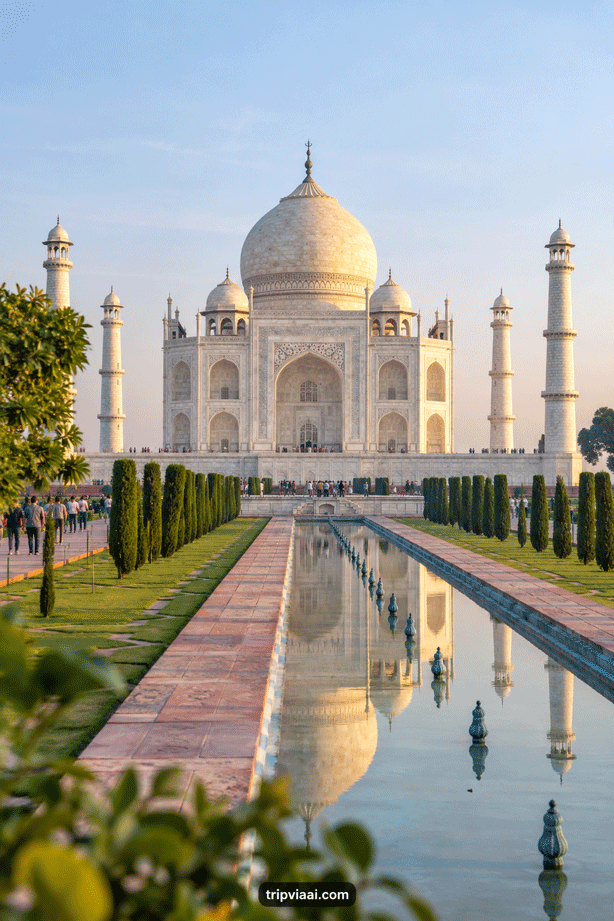
Taj Mahal in Agra, India – Mughal Garden View
Is Agra Worth Visiting on a Short Trip?
If the Taj Mahal is high on your personal travel list, yes, Agra can be worth including even when you have limited time.
A common mistake is deciding whether a destination is “worth it” based only on how many attractions it has. Agra may have fewer major sightseeing priorities than Delhi, but one of those attractions is a landmark that many travellers specifically want to experience in person.
The better question is whether the experience matters enough to you to justify the travel involved.
If your answer is yes, Agra can fit naturally into a North India itinerary. If the Taj Mahal is not particularly important to you, you may prefer to use those travel hours for more time in Delhi or Jaipur.
How Much Time Do You Need in Agra?
For many travellers, one full day in Agra can cover the major highlights, particularly when the itinerary is focused on the Taj Mahal and Agra Fort.
An overnight stay can be useful when you prefer a slower pace or want more flexibility around sightseeing. It also makes sense when your transportation route works naturally through Agra instead of requiring you to return to Delhi.
The exact choice should depend on the rest of your route. Don’t automatically add an extra hotel night if doing so makes your overall journey less convenient.
Important planning point
Check the current official visitor information before choosing your Taj Mahal visit date. The monument is closed to visitors on Fridays, so your itinerary should account for that when you are deciding how to arrange Delhi, Agra and Jaipur.
Jaipur: Choose It If You Want Forts, Palaces and Rajasthan
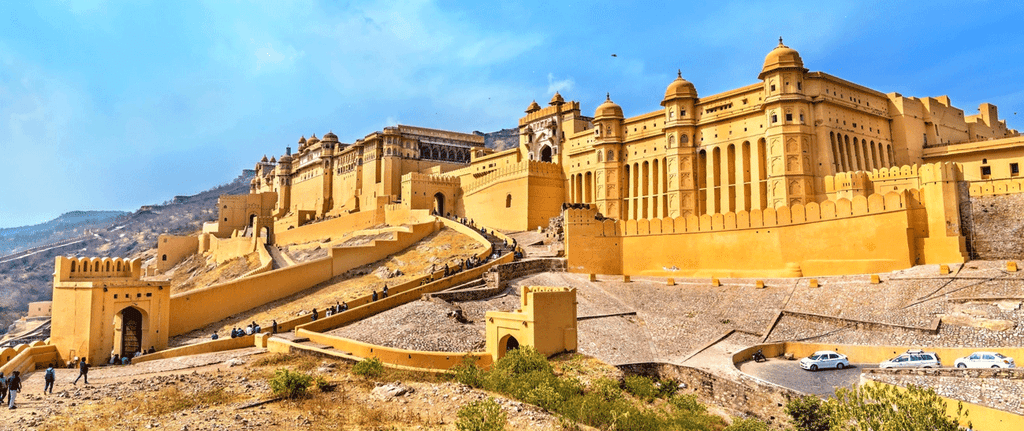
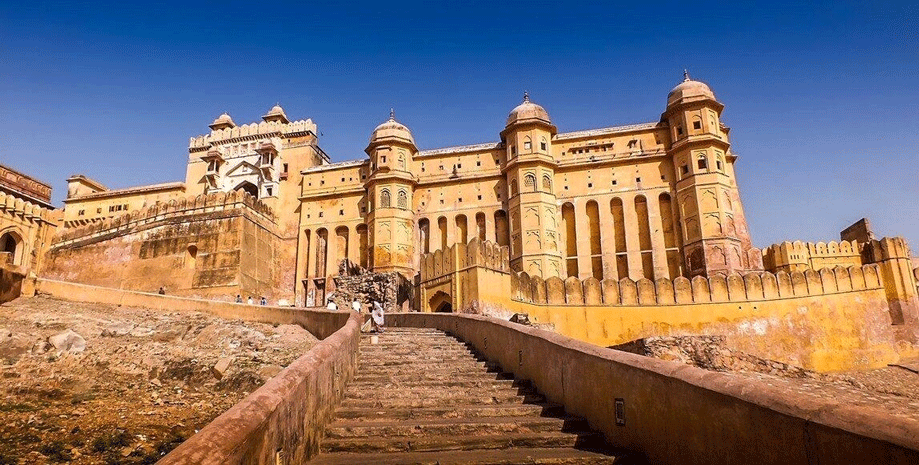
Jaipur offers a very different experience from both Delhi and Agra. The city is strongly associated with Rajasthan’s royal history, colourful streets, grand architecture, forts and palaces, making it an appealing choice for travellers who want a destination with a distinctive visual and cultural identity.
Major attractions such as Amber Fort, City Palace, Hawa Mahal and Jantar Mantar give you several different ways to explore Jaipur. Instead of having one landmark dominate the entire visit, you can spread your sightseeing across historic architecture, royal heritage, markets and local neighbourhoods. This is one reason Delhi Agra Jaipur works as a first India trip for many travellers: the three destinations don’t simply repeat the same type of sightseeing. Jaipur adds a distinctly different architectural and cultural experience to the journey.
That variety makes Jaipur particularly attractive for travellers who enjoy photography and architecture. It also gives you enough different experiences to justify spending two or three days here without making the itinerary feel repetitive.
Who Should Choose Jaipur?
Jaipur is a strong match if you enjoy historic buildings, forts, palaces and destinations where architecture plays a major role in the travel experience.
It can also suit travellers who want something different from a large metropolitan city. Delhi introduces you to the energy of a major capital, while Jaipur gives you a stronger sense of Rajasthan’s regional character.
If you imagine your first India trip filled with grand entrances, historic courtyards, colourful streets and impressive hilltop architecture, Jaipur may be the destination that appeals to you most.
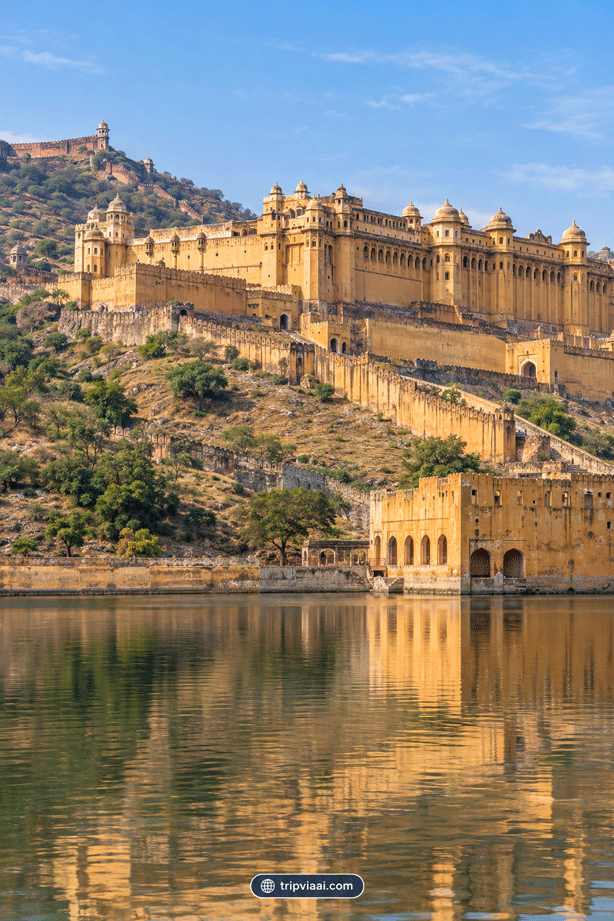
Amber Fort, Jaipur — A Majestic Hilltop Heritage Experience
How Many Days Do You Need in Jaipur?
A two-day Jaipur stay gives many first-time visitors enough time to explore the major attractions without making every hour feel rushed. Three days can be better if you prefer slower sightseeing, want more time for markets and food or simply don’t enjoy moving through attractions quickly.
Trying to complete every famous place in a single day can turn Jaipur into a checklist rather than an experience. The city becomes more enjoyable when you allow enough time to appreciate the architecture instead of constantly thinking about the next stop.
This is also why Jaipur can be a good destination to place toward the end of a Delhi Agra Jaipur itinerary if you want to finish your trip with a slightly slower pace.
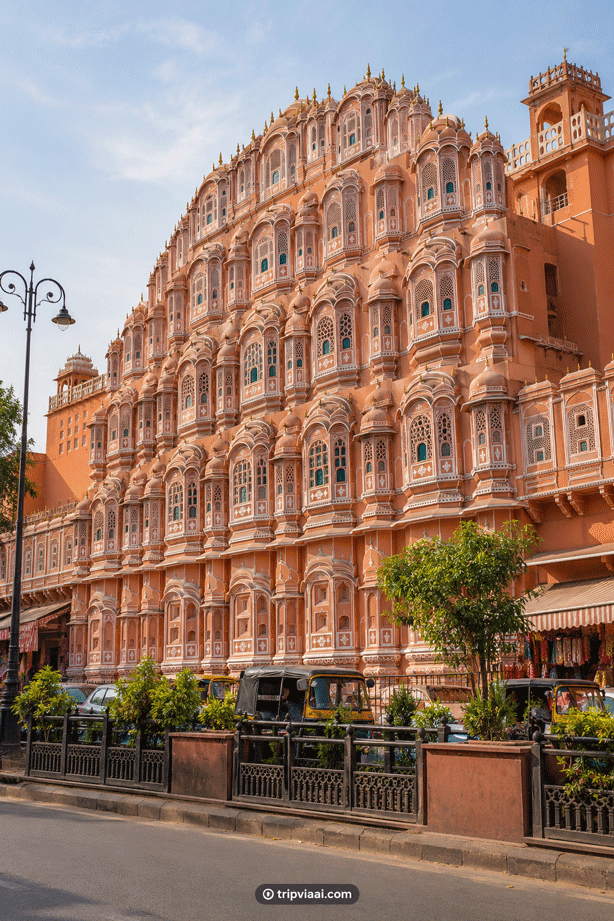
Hawa Mahal Jaipur: A Street-Level View of the Pink City’s Iconic Landmark
Delhi vs Agra vs Jaipur: Which One Fits Your Travel Style?
Instead of choosing based on popularity, match the destination with what you actually enjoy.
| If You Mostly Want… | Best Choice | Why |
|---|---|---|
| Variety and city experiences | Delhi | More diverse sightseeing, food and neighbourhoods |
| The Taj Mahal | Agra | The obvious choice for this landmark |
| Forts and palaces | Jaipur | Strong Rajasthan architectural experience |
| Food and urban culture | Delhi | Wider range of city experiences |
| Mughal history | Agra | Strong connection to Mughal heritage |
| Rajasthan culture | Jaipur | Distinct regional identity |
| A classic first-timer route | All Three | Different experiences in one journey |
This comparison shows why there is no universal winner. A traveller who loves food and museums may prefer Delhi, while someone who has always dreamed of seeing the Taj Mahal may consider Agra essential.
Likewise, a person fascinated by forts and royal architecture may enjoy Jaipur more than either of the other two cities.
Your priorities should come first.
What If You Have to Skip One?
If your vacation is too short for all three destinations, don’t feel that you are doing your India trip incorrectly by leaving one out.
If the Taj Mahal is not important to you, Agra may be the easiest destination to remove. If you are not particularly interested in large cities, you may prefer to spend more time in Jaipur instead of giving Delhi several days.
On the other hand, if you love food, museums and urban history, reducing your time in Delhi just to fit another destination may not make sense.
The best itinerary is the one that matches your interests while keeping the travel pace comfortable.
Build the Right Itinerary for Your Time
Once you know which destination suits your interests, the next step is deciding how many places you can realistically fit into your vacation. A good Delhi Agra Jaipur itinerary should account for sightseeing as well as hotel checkouts, transportation and time to recover after a busy day.
The biggest mistake is assuming that every day of a trip can be used for sightseeing from morning until night. When you allow some breathing room, the same number of vacation days can feel much more enjoyable.
If You Have 3 Days
With only three days, I would not recommend trying to experience Delhi, Agra and Jaipur properly. You could technically pass through all three, but most of your time would be spent moving between destinations rather than experiencing them.
If the Taj Mahal is your priority, a Delhi and Agra combination makes more sense. You can experience some of Delhi’s major highlights and then dedicate your remaining time to Agra.
If you are more interested in Rajasthan’s architecture and culture, Delhi and Jaipur may suit you better. This gives you enough time to experience Jaipur rather than treating it as a quick stop between two long transfers.
For a three-day vacation, seeing two destinations comfortably is generally more valuable than collecting three city names on your itinerary.
If You Have 5 Days
Five days is enough to experience the highlights of all three destinations, but you should expect an active trip. You will need to keep your sightseeing focused and avoid filling every available hour with attractions.
A practical structure could look like this:
| Day | Destination | Main Focus |
|---|---|---|
| Day 1 | Delhi | Major historical sights |
| Day 2 | Delhi | Culture, food and additional sightseeing |
| Day 3 | Agra | Taj Mahal and Agra Fort |
| Day 4 | Jaipur | Forts and major heritage sights |
| Day 5 | Jaipur | Palaces, markets and local experiences |
A five-day Delhi Agra Jaipur itinerary is best treated as a highlights trip rather than a deep exploration of every city. The goal is to experience the character of each destination while keeping enough time for transportation, meals and rest.
This is only a framework, not a fixed schedule. Your arrival and departure times may require you to rearrange the days, particularly if your international flight arrives late or leaves early.
The important thing is to avoid treating your travel days as completely free sightseeing days. A transfer between cities involves more than the time spent inside a train or car.
If You Have 7 Days
Seven days gives you considerably more flexibility and makes the classic Delhi Agra Jaipur route easier to enjoy.
A balanced approach could be around two days in Delhi, one or two days in Agra and two or three days in Jaipur. The exact split should depend on your interests, because there is no reason to give every city exactly the same number of days.
The extra time should also be used to slow down rather than simply adding more attractions. You can enjoy a longer meal, explore a neighbourhood, spend more time at a historical site or keep part of an afternoon free.
That flexibility can make a seven-day first India trip feel much less tiring than a five-day schedule covering exactly the same destinations.
Delhi → Agra → Jaipur or the Reverse?
The classic route is Delhi → Agra → Jaipur, and it is a natural choice for many travellers arriving in Delhi.
However, you don’t have to follow this direction simply because it is popular. Your international flights, domestic connections and final departure point should influence the route you choose.
If you arrive in Delhi and fly home from Delhi, for example, you should think carefully about where you want to spend your final night. Leaving a long intercity transfer until immediately before an international flight can create unnecessary stress.
The reverse route, Jaipur → Agra → Delhi, can work just as well when your travel arrangements make Jaipur the more convenient starting point.
The best route is therefore not necessarily the one that looks best on a travel map. It is the one that fits your flights, transportation and available time with the least unnecessary backtracking.
Train or Private Car?
Transportation is an important part of planning a Delhi Agra Jaipur trip, especially when your vacation is short.
Train
Trains can be a practical option for travellers who prefer organised intercity transportation and want to avoid spending long periods on the road. They can also make sense when the available service fits your schedule well.
Before booking, check the current timetable, availability, travel class and station details for your dates because schedules and availability can change.
Private Car
A private car gives you more flexibility around departure times and can make it easier to travel directly between destinations or hotels. This can be particularly useful when you want to avoid managing multiple transfers with luggage.
The trade-off is that road travel can be affected by traffic and other delays, so the estimated journey time should not be treated as a guarantee.
Neither option is automatically better. Choose according to your budget, comfort level, luggage and how much flexibility you want during the trip.
Don’t Forget the Time Around the Journey
A common planning mistake is looking only at the official travel duration.
Suppose your train or car journey takes several hours. You also need time to check out of your hotel, reach the departure point, wait for transportation, arrive at the next destination, reach your hotel and complete check-in.
When you add those steps together, a transfer can consume most of a day.
This is why putting a major attraction immediately after every intercity journey is risky. If your transportation is delayed, the rest of your sightseeing schedule can quickly become difficult to manage.
Leave some breathing room whenever possible.
Choose Hotel Locations for Convenience
A hotel should not be judged only by its room, facilities or review score. Location matters, particularly when you are visiting a large city for only two or three days.
Before booking accommodation, look at the areas where you plan to spend most of your sightseeing time and consider how easily you can reach major attractions and transportation points.
You should also avoid changing hotels unnecessarily. Every hotel move requires packing, checkout, transportation and another check-in, which can quietly consume several hours of a short vacation.
For a Delhi Agra Jaipur itinerary, convenience can be more valuable than adding another hotel change simply to stay in a different neighbourhood.
Plan Around Weather and Opening Times
Weather can have a noticeable effect on how comfortable your sightseeing days feel, particularly because many of the major attractions involve outdoor walking.
Check the expected conditions around your travel dates and avoid building every outdoor activity into the hottest or least comfortable part of the day. Early starts can often make historical sightseeing more pleasant, while a slower afternoon can give you time to rest.
You should also check current opening hours, ticket requirements and visitor rules for major attractions before finalising your daily schedule. Information on travel websites can become outdated, so official sources should take priority when planning an important visit.
Don’t Turn Your First India Trip Into a Checklist
Seeing famous landmarks is an important part of visiting Delhi, Agra and Jaipur, but your trip should not feel like a race between attractions.
Give yourself time to enjoy a meal, explore a market, walk through an interesting neighbourhood or simply sit down after a long morning of sightseeing. Those moments may not appear in a search result, but they can become some of the most memorable parts of your journey.
This is especially important for international visitors experiencing India for the first time. The scale, traffic, crowds and pace of a new country can be very different from what you are accustomed to, so building recovery time into your schedule is a practical decision rather than wasted vacation time.
The Smartest Way to Build Your Route
If you are still unsure how to organise your trip, use this simple order:
Start with your flights. Decide where you arrive and where you need to be when the trip ends.
Choose your priorities. Decide whether the Taj Mahal, Rajasthan’s architecture, Delhi’s history, food or city culture matters most.
Select the destinations. Use those priorities to decide whether you need one, two or all three cities.
Check transportation. Compare current train, road and other available options before fixing your exact sequence.
Book convenient accommodation. Choose locations that make sightseeing and transportation easier rather than focusing only on the hotel itself.
Build a flexible daily plan. Decide which attractions are essential, then leave enough space for meals, transfers and unexpected delays.
This approach keeps the planning process simple and prevents you from creating an itinerary that looks impressive but is exhausting to follow.

Planning the Perfect Delhi, Agra & Jaipur Journey
Common Planning Mistakes to Avoid
A few mistakes can make an otherwise good India trip itinerary unnecessarily difficult.
Trying to Visit All Three With Too Little Time
If you only have three days, adding three cities creates more transportation and less actual sightseeing. Choose the destinations that matter most instead.
Booking Attractions Without Checking the Day
Always check current opening days and visitor rules before fixing your itinerary. This is particularly important for major landmarks with specific weekly closures.
Ignoring Your Departure Plans
Don’t schedule a long intercity transfer immediately before an important international flight unless you have enough backup time.
Packing Every Hour With Activities
A full schedule may look efficient, but delays and tiredness are normal parts of travel. A little flexibility can prevent one small problem from affecting the entire day.
Choosing a Hotel Without Considering Location
A hotel can have excellent facilities but still be inconvenient for your itinerary. For a short trip, spending less time travelling across a city can be more valuable than having extra hotel amenities.
Make the Final Choice
After comparing the three destinations and thinking about your available time, the decision becomes much easier. Delhi, Agra and Jaipur are all worthwhile, but you do not need to visit all three simply because they are part of a famous route.
Your first India trip should be built around the experiences you actually want. If you choose the right combination, even a short vacation can feel complete.
Which One Should You Choose?
Choose Delhi if you want variety
Delhi is the better choice if you enjoy a mixture of history, food, museums, markets and city life. It is also a practical starting point for many international travellers, which makes it easy to combine with another destination.
Choose Agra if the Taj Mahal is your priority
If seeing the Taj Mahal in person has been one of your reasons for planning an India trip, Agra is difficult to replace. You can keep your stay relatively short while still experiencing one of the country’s most recognisable landmarks and other important Mughal heritage.
Choose Jaipur if you love architecture and Rajasthan
Jaipur is the stronger choice for travellers who are especially interested in forts, palaces, colourful streets and Rajasthan’s distinctive heritage. It also gives your trip a different atmosphere from Delhi’s large-city environment.
Choose all three if you have 5–7 days
With enough time, combining Delhi Agra Jaipur gives you a varied introduction to northern India. You get the capital’s city experience, Agra’s Mughal heritage and Jaipur’s Rajasthan architecture within one journey.
The key is to keep the schedule realistic rather than trying to see every attraction.
A Simple Decision Guide
If you’re still undecided, use this quick guide:
Have 3 days? Pick two destinations based on your priorities.
Have 5 days? You can include all three, but expect an active itinerary.
Have 7 days? The three-city route becomes much easier to enjoy because you have more room for travel and rest.
Taj Mahal is your dream attraction? Make Agra a priority.
Forts and palaces interest you most? Give Jaipur more time.
Food, museums and city culture matter most? Spend more time in Delhi.
You prefer slow travel? Choose fewer destinations rather than rushing through all three.
There is no prize for completing the longest itinerary. A trip that gives you time to actually enjoy each destination is usually more memorable than one that simply covers more ground.
Final Verdict
So, Delhi, Agra or Jaipur—which should you choose for your first India trip?
The answer depends less on which city is “best” and more on what you want your trip to feel like. If you are planning a Delhi Agra Jaipur trip, think of the route as three different chapters of the same journey rather than a competition between destinations.
Choose Delhi for variety and big-city experiences. Choose Agra if the Taj Mahal is a must-see. Choose Jaipur if forts, palaces and Rajasthan are what excite you most.
And if you have five to seven days, combining Delhi Agra Jaipur can give you a memorable introduction to northern India without requiring you to choose only one.
Most importantly, don’t build your itinerary around the number of places you can tick off. Build it around the experiences you genuinely want to remember.
Most importantly, don’t build your itinerary around the number of places you can tick off. Build it around the experiences you genuinely want to remember. For more practical ideas to plan your journey, explore TripViaAI’s travel guides and itinerary resources.