

 Posted by
 Introduction
Travel tips for first time travelers can make a first trip much easier to manage, especially when you are unfamiliar with the planning process. From deciding what to pack and setting a realistic budget to organizing important documents and understanding your destination, a little preparation can prevent many common travel problems.
Your first trip does not need to follow a perfect schedule. The goal is to prepare for the important details while leaving enough flexibility to enjoy the journey. Simple decisions, such as packing only what you need, keeping backup copies of important documents, and understanding how you will get around your destination, can make a noticeable difference once you are on the road.
If you are still planning the basics of your journey, our Travel Guide for Beginners covers the essential planning steps before you leave home.
In this guide, you will find practical travel tips for first time travelers covering planning, packing, budgeting, document safety, destination research, airport preparation, and handling unexpected situations. The aim is to help you prepare confidently without making your first trip unnecessarily complicated.
Travel Tips for First Time Travelers at a Glance
The best travel tips for first time travelers focus on planning ahead, packing smart, protecting important documents, managing your budget, and staying flexible during the journey. These simple habits help reduce stress, avoid common beginner mistakes, and make your first trip more enjoyable and memorable.

First Time Traveler
Essential Planning Tips for First Time Travelers
1. Plan Your Trip in Advance
One of the most useful travel tips for first time travelers is to create a basic plan before making major bookings. You do not need to schedule every hour of your trip, but deciding your destination, travel dates, approximate budget, and main activities gives you a clear starting point.
Start by identifying the parts of the trip that need to be arranged first. Check your passport validity and entry requirements, compare transportation options, choose a suitable area to stay, and estimate your expected daily expenses. Once these basics are clear, it becomes much easier to decide what needs to be booked in advance and what can remain flexible.
A simple plan can also help you avoid unnecessary expenses. For example, knowing how you will travel from the airport to your accommodation can prevent you from making an expensive last-minute decision. Similarly, checking hotel locations before booking can help you avoid paying less for a room that requires expensive transportation every day.
At the same time, leave some room for changes. Weather, transportation delays, opening hours, or unexpected opportunities can affect your plans. A useful itinerary should give you direction without making the entire trip feel rigid.
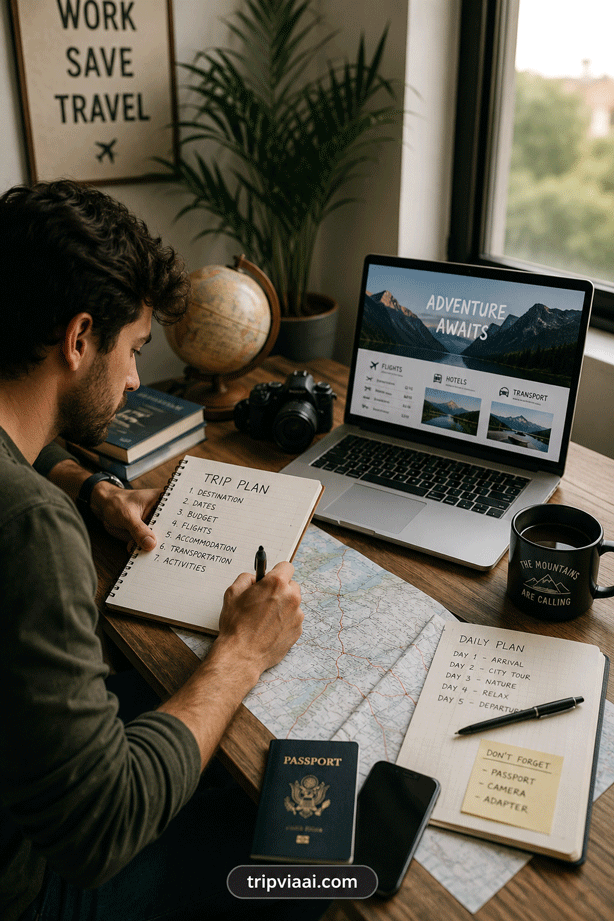
Travel Planning Desk
2. Pack Smart, Not Heavy
Overpacking can make a first trip much more difficult than it needs to be. A heavy suitcase is harder to move through airports, train stations, hotels, and crowded streets, especially when you are still getting used to traveling.
Before packing, think about what you will actually use rather than preparing for every possible situation. Choose comfortable clothes that can be mixed and matched, and consider the weather and activities at your destination. If you are traveling for several days, you usually do not need a completely different outfit for every day.
Organizing your luggage also matters. Keep frequently used items where they are easy to reach, and group smaller belongings such as chargers, toiletries, and documents so they do not get scattered throughout your bag. Packing cubes can be useful for keeping different types of clothing and accessories organized.
Before closing your suitcase, ask yourself:
- Will I realistically use this during the trip?
- Can one item serve more than one purpose?
- Is this suitable for the destination and weather?
- Can I buy it easily at my destination if I unexpectedly need it?
- Will carrying this make my luggage unnecessarily heavy?
A lighter bag gives you more flexibility throughout the journey. You can move between transportation options more easily, spend less time searching through your luggage, and avoid carrying items that never get used. For first-time travelers, packing with a purpose is usually more useful than packing for every possible situation.
3. Keep Your Documents Safe
Protecting your passport and other important documents should be a priority on every trip. For first-time travelers, losing access to a passport, visa, booking confirmation, or travel insurance information can quickly turn a simple problem into a stressful situation.
Before leaving home, organize your essential documents in one secure place. Keep your passport, visa documents, travel insurance details, accommodation information, and important booking confirmations easy to access but protected from unnecessary handling.
It is also important to create digital backups before departure. Save clear copies of your passport, visa, travel insurance policy, hotel reservations, flight tickets, and other important documents on your phone. You can also store copies in a secure cloud service or email them to yourself so you can access them if your physical documents or phone become unavailable.
A simple document backup system should include:
- A physical copy of important travel information
- Digital copies stored securely online
- Your passport and visa details
- Flight and accommodation confirmations
- Travel insurance information
- Important emergency contacts
Remember that digital copies do not replace your original documents. They simply provide an additional backup when you need to recover important information quickly.
Taking a few minutes to organize your documents before departure can prevent unnecessary stress later. Good document preparation is one of the simplest travel tips for first time travelers because it helps you stay prepared when unexpected situations occur.
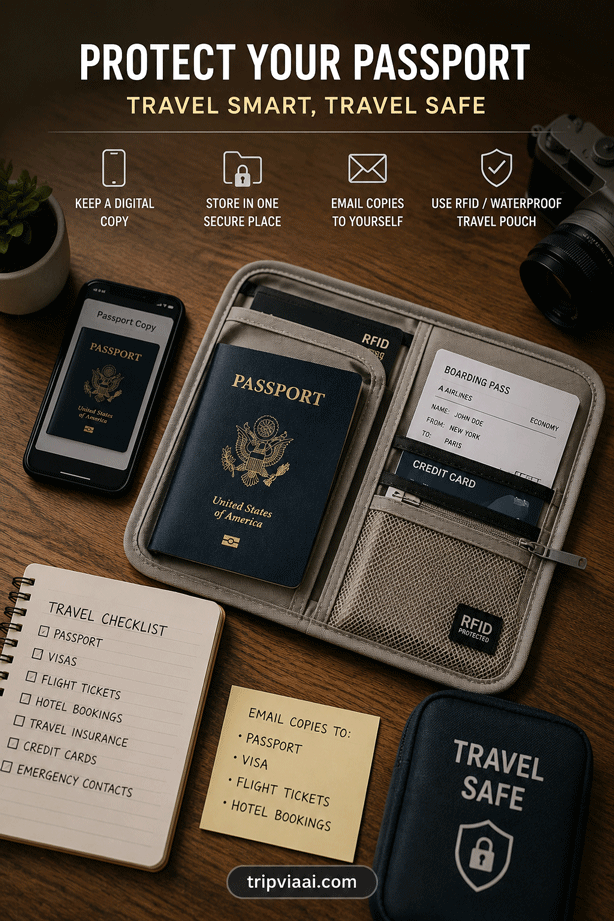
Travel Documents Setup
4. Set a Realistic Travel Budget
A realistic travel budget helps you enjoy your trip without constantly worrying about how much money you have left. First-time travelers often calculate only the cost of flights and accommodation, then discover that food, transportation, activities, shopping, and small unexpected expenses add up quickly.
Before your trip, divide your expected spending into clear categories. You do not need to predict every expense exactly, but having a reasonable estimate gives you a much better idea of what you can comfortably afford.
A simple travel budget can include:
- Flights or other long-distance transportation
- Accommodation
- Food and drinks
- Local transportation
- Activities and attractions
- Shopping and personal expenses
- Travel insurance
- Emergency or backup funds
It is also useful to keep a separate travel buffer fund rather than treating your entire budget as available spending money. This reserve can help if a flight is delayed, transportation costs more than expected, weather changes your plans, or you need to pay for an unexpected expense.
For example, if your planned trip budget is $2,000, you could decide in advance how much is available for accommodation, food, transportation, and activities while keeping a separate amount available for unexpected situations. The exact amount will depend on your destination, trip length, and personal finances.
Before you leave, check your budget:
- Have I included daily expenses as well as major bookings?
- Do I know approximately how much I can spend each day?
- Have I included transportation between major locations?
- Do I have money reserved for unexpected expenses?
- Do I have access to more than one payment method?
A good budget should give you control without making the trip feel restrictive. Planning your expected expenses in advance can help you make better decisions, avoid unnecessary spending, and enjoy your journey with greater confidence.
5. Book Flights and Hotels Strategically
Booking flights and accommodation requires more than simply choosing the first option that looks affordable. For first-time travelers, comparing prices, locations, cancellation policies, and travel times can help avoid expensive decisions later.
Start by comparing several suitable options instead of focusing only on the lowest price. A cheaper hotel may cost more overall if it is far from public transportation or the places you plan to visit. Similarly, a flight with a lower fare may not be the best value if it includes inconvenient timings or additional costs for baggage and other services.
Booking earlier can give you more choices and may sometimes provide better prices, but there is no single booking window that works for every destination or trip. Prices can vary depending on the route, season, demand, and type of accommodation. Instead of assuming that the earliest option is always the cheapest, compare available choices and make sure the total cost fits your travel budget.
Before confirming a booking, check:
- The total price, including applicable fees
- Baggage rules and additional charges
- Hotel location and transportation options
- Cancellation and change policies
- Check-in and check-out times
- Reviews from recent guests
- Whether the booking matches your actual itinerary
Price alerts and comparison tools can also help you monitor changing fares before making a decision. If your travel dates are flexible, checking nearby dates may reveal better options.
If you want more practical ways to reduce travel costs while maintaining comfort, you can also read 7 Smart Ways to Travel Cheap Without Sacrificing Comfort.
Smart booking is not simply about finding the lowest advertised price. It is about choosing an option that provides a good balance of cost, convenience, flexibility, and overall value.
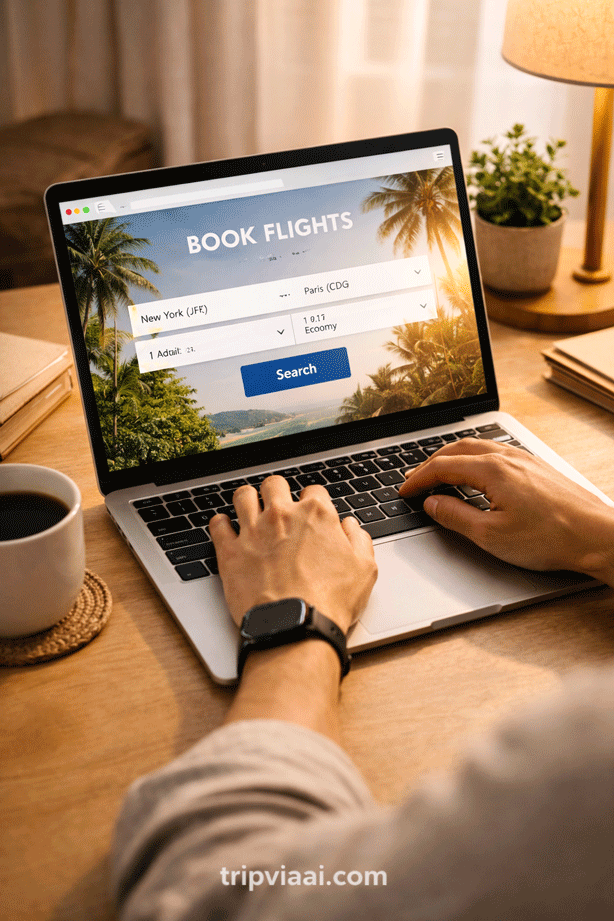
Booking Flights Online
6. Research Your Destination Before Arrival
Spending some time learning about your destination before you leave can make your first trip much easier. You do not need to know everything about a city or country, but understanding a few practical details can help you avoid confusion and make better decisions after you arrive.
Start with the basics. Learn about the local currency, transportation options, weather, common payment methods, and the general areas where you will be staying. If you know how you will travel from the airport to your accommodation before arrival, you can avoid making rushed decisions when you are tired or unfamiliar with the area.
It is equally important to understand local customs and rules. Tipping practices, dress expectations, public transportation rules, photography restrictions, and behavior in religious or cultural places can vary significantly between destinations. A quick check before your trip can help you avoid situations that may be uncomfortable or disrespectful.
Before arriving, check these basics:
- Local currency and common payment methods
- Airport and local transportation options
- Weather during your travel dates
- Basic local customs and etiquette
- Tipping expectations
- Important public transportation rules
- Local laws or restrictions that may affect visitors
- A few useful words or phrases in the local language
You do not need to memorize everything. Save important information on your phone and keep essential details available offline so you can access them even if your internet connection is unreliable.
A small amount of destination research can make you feel more confident from the moment you arrive. It also helps you spend less time figuring out basic logistics and more time enjoying the places you came to experience.
7. Download Offline Maps Before Departure
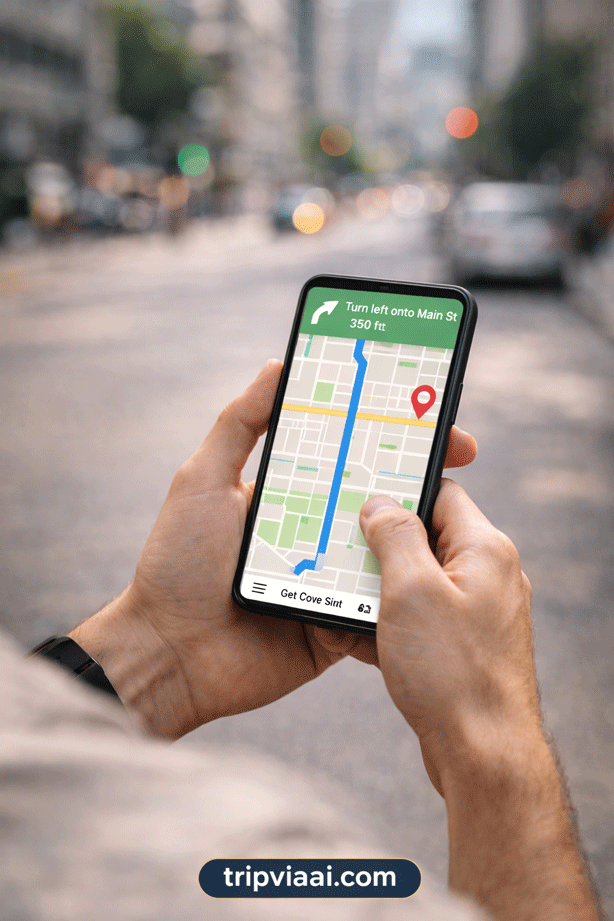
Reliable internet access is useful when you are traveling, but you should not depend on mobile data for every part of your journey. Roaming problems, weak signals, limited data plans, or unexpected connectivity issues can make navigation difficult, especially when you have just arrived in an unfamiliar destination.
Downloading offline maps before departure gives you access to important locations even when your internet connection is unavailable. Save the area around your accommodation, airport or train station, major attractions, and other places you expect to visit.
It is also helpful to save the address and contact details of your accommodation separately. If your phone loses its connection, you can still refer to the saved information instead of trying to remember the location.
Before leaving home, check that you can access:
- Your accommodation location
- Airport, train station, or bus terminal
- Main attractions you plan to visit
- Important transportation points
- Nearby pharmacies or other essential services
- The route between major locations on your itinerary
After downloading the maps, test them while your phone is in offline mode. This simple step helps confirm that the information you need is actually available without an internet connection.
Offline navigation is especially useful during the first few hours of a trip, when you may be tired, unfamiliar with the area, or dealing with limited mobile connectivity. A few minutes of preparation before departure can make getting around much easier and give you more confidence when exploring a new destination.
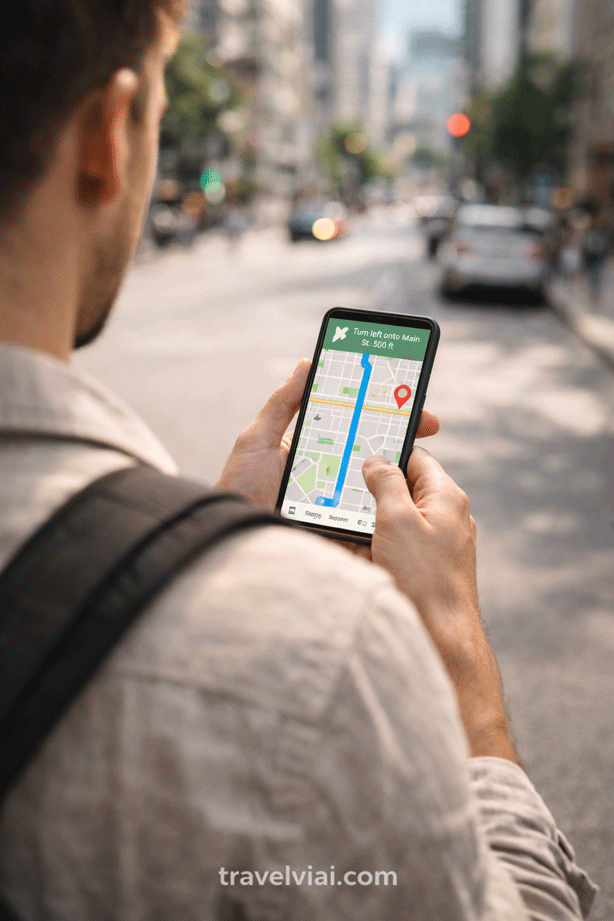
Navigation Using Phone
8. Create an Emergency Contact List
First-time travelers often spend most of their preparation time on flights, hotels, and activities, but an emergency contact list is just as important. You may never need it, but having essential information ready can make an unexpected situation much easier to handle.
Before leaving home, create one simple list with the contact details and information you may need during your trip. Keep a digital copy on your phone and save another copy somewhere that you can access if your phone is lost, damaged, or out of battery.
Your emergency travel list can include:
- Family member or trusted contact
- Accommodation name, address, and phone number
- Travel insurance provider and policy information
- Airline or transportation booking details
- Local emergency services
- Embassy or consulate information when traveling internationally
- Bank or card provider contact information
- Any important medical or personal information you may need to access quickly
Do not rely only on a contact saved in your phone. If your phone becomes unavailable, you should still have access to the most important information through another method.
It is also worth checking that the information is current before departure. An old hotel number, outdated booking reference, or incorrect contact detail will not be very useful when you actually need it.
A few minutes spent creating an emergency contact list can give you greater peace of mind throughout your trip. Good preparation does not mean expecting something to go wrong; it simply means knowing where to find important information if an unexpected situation occurs.
9. Give Yourself Enough Time at the Airport
A first-time traveler can easily underestimate how long it takes to get from the airport entrance to the departure gate. Traffic, parking, baggage drop, security screening, terminal changes, and long walking distances can all add unexpected delays.
Imagine arriving at the airport thinking you have plenty of time, only to find a long security line or a crowded check-in area. Even if everything eventually goes smoothly, the experience can become stressful because you are constantly watching the clock.
The amount of extra time you need depends on the type of trip and the airport. An unfamiliar airport may require more time because you may need to find the correct terminal or gate. Checked baggage can also add another step compared with traveling with only a carry-on bag. During busy travel periods, airport queues may take longer than usual.
Instead of using one fixed arrival rule for every journey, consider the entire process you need to complete before reaching your gate. Check your airline’s current guidance, consider the airport’s size and your travel requirements, and allow additional time if you are unfamiliar with the location.
Arriving early is not about spending unnecessary hours at the airport. It is about creating enough breathing room to deal with small problems without turning them into a last-minute emergency. A relaxed start can make the rest of your journey feel much easier.

Comfortable Travel Style
10. Consider Travel Insurance Before an International Trip
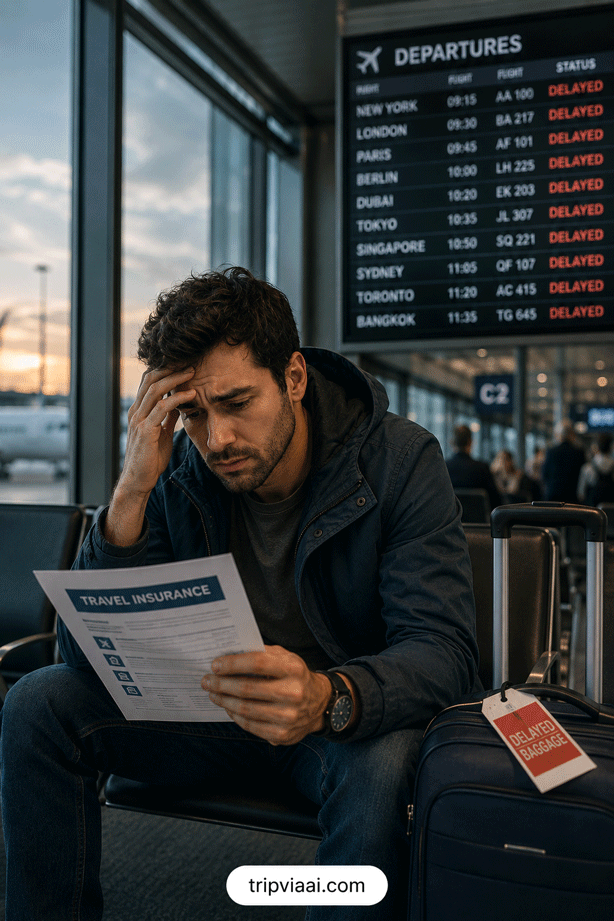
Travel insurance is easy to overlook when everything about a trip seems straightforward. However, an unexpected medical issue, trip cancellation, baggage problem, or major travel delay can create costs that are difficult to manage on your own.
The right coverage depends on the type of trip you are taking. For an international journey, check whether the policy includes the areas that matter most to you, such as emergency medical expenses, trip cancellation or interruption, baggage problems, and significant travel delays. Do not choose a policy based only on its price.
Before purchasing coverage, read the policy details carefully. Pay attention to coverage limits, exclusions, deductibles, eligibility requirements, and the process for making a claim. Some situations may not be covered, so understanding the terms before departure is more useful than discovering them during an emergency.
A simple way to evaluate a policy is to ask:
What could this trip realistically cost me if something goes wrong, and which of those risks does the policy actually cover?
Travel insurance does not prevent problems from happening, but suitable coverage can reduce the financial impact of certain unexpected situations. For first-time international travelers, understanding the protection they are purchasing can be just as important as comparing flights and hotels.
The goal is not to buy the most expensive policy. It is to understand your trip’s risks and choose coverage that provides appropriate protection for your circumstances.
Travel Insurance Planning
11. Don’t Try to See Everything
One of the easiest ways to make a first trip exhausting is to fill every day with too many activities. Seeing a long list of attractions may look efficient when you are planning at home, but the reality can be very different once you account for transportation, queues, meals, breaks, and unexpected delays.
A better approach is to choose a few experiences that matter most to you and give yourself enough time to enjoy them. For example, instead of planning five major attractions across different parts of a city in one day, group activities that are located near each other and leave some open time between them.
This also gives you flexibility when something changes. A delayed train, bad weather, a busy attraction, or an interesting local place you discover along the way does not have to ruin your schedule if every hour has not already been planned.
A simple planning rule: prioritize your must-see experiences first, then add optional activities only if your schedule has enough room.
Leaving some free time can also make a trip feel more enjoyable. You may have time to sit at a local café, explore a neighborhood without rushing, or simply take a break after a busy morning.
Your first trip does not need to become a race to visit every famous attraction. A balanced itinerary gives you the opportunity to experience a destination properly while reducing unnecessary fatigue and stress.
12. Inform Your Bank Before Traveling
An unexpected card decline can be frustrating when you are far from home, especially if you are trying to pay for a hotel, transportation, or an important purchase. International transactions can sometimes trigger security checks because they may look different from your normal spending activity.
Before leaving for an international trip, check your bank’s travel and card-security settings. Some banks allow you to add travel information through their mobile app or online banking, while others may provide different instructions for international transactions.
It is also a good idea to check your card’s expiration date, understand any foreign transaction fees, and make sure you know how to contact your bank from outside your home country.
Before departure, confirm:
- Your debit or credit card will be usable at your destination.
- Your bank has your current contact information.
- You know how to report a lost or stolen card.
- You have access to more than one payment method.
- You understand any applicable foreign transaction or ATM fees.
Avoid relying on a single card for your entire trip. Keeping a backup payment method in a separate secure location can give you another option if your primary card is lost, damaged, or temporarily unavailable.
A few minutes of financial preparation before departure can prevent unnecessary payment problems later. Good travel planning is not only about booking flights and accommodation; it also includes making sure you can access your money when you need it.
13. First-Time Traveler Quick Checklist
Before leaving home, take a few minutes to review the most important parts of your trip. This simple checklist can help you catch small details that are easy to overlook when you are busy preparing for departure.
Trip Planning
☐ Destination and travel dates are confirmed
☐ Main transportation and accommodation are arranged
☐ Important activities that require advance booking are checked
Documents and Money
☐ Passport and required travel documents are ready
☐ Digital copies of important documents are stored securely
☐ Travel insurance information is accessible
☐ Travel budget and emergency funds are prepared
☐ At least one backup payment method is available
Navigation and Communication
☐ Offline maps are downloaded
☐ Accommodation address and contact information are saved
☐ Important emergency contacts are available offline
☐ Bank or card provider contact information is accessible
Before Leaving for the Airport
☐ Baggage requirements have been checked
☐ The route to the airport and expected travel time are known
☐ Airline instructions have been reviewed
☐ Enough time has been allowed for airport procedures
You do not need to prepare every detail perfectly. The purpose of this checklist is simply to make sure the important basics are covered before you leave home. Once those essentials are organized, you can focus more on enjoying the journey and less on solving avoidable problems.
Travel Apps in Action
Conclusion
Your first trip does not need to be perfectly planned to be a successful one. What matters most is preparing for the details that can create problems later, while still leaving enough flexibility to enjoy the journey.
From organizing your documents and managing your budget to researching your destination, preparing for airport procedures, and keeping backup options available, small preparations can make a significant difference. The goal is not to eliminate every unexpected situation, but to make sure you are prepared to handle common problems without unnecessary stress.
Use this guide as a practical starting point, adjust the advice to suit your destination and travel style, and give yourself enough time to prepare before departure. With the right preparation, your first journey can feel less overwhelming and give you the confidence to enjoy the experience.
For more beginner-friendly travel guides and practical travel advice, visit TripViaAI.